

Mindfulness-Based Therapy (MBT) is a therapeutic approach that teaches you to pay attention to the present moment—your thoughts, feelings, and physical sensations—without judgment. The goal isn't to stop your thoughts, but to change how you relate to them, helping you break free from automatic, unhelpful reactions to stressors and respond with more clarity. This guide explores how MBT works, its benefits for addiction recovery, and how to find support, particularly in Massachusetts.
Key Takeaways
- What It Is: Mindfulness-Based Therapy is a hands-on approach that trains you to observe your internal experiences (thoughts, feelings) without judgment, helping to break cycles of reactive behavior common in addiction.
- How It Works: The practice leverages neuroplasticity—the brain's ability to rewire itself. It strengthens the brain's prefrontal cortex (the control center) and calms the amygdala (the fear center), which can reduce cravings and emotional reactivity.
- Common Types: The two most common forms are Mindfulness-Based Stress Reduction (MBSR) for general stress and Mindfulness-Based Cognitive Therapy (MBCT), which is specifically designed to prevent depressive relapse.
- Finding Help: Many specialized outpatient programs right here in Massachusetts integrate MBT into comprehensive care plans for addiction and co-occurring disorders, combining it with therapies like CBT and DBT for a holistic approach.
The Foundation of Mindfulness Therapy
Think of your mind as a busy highway, with thoughts and emotions constantly speeding past like cars. Mindfulness-Based Therapy teaches you how to step off the road and onto the sidewalk. From there, you can simply watch the traffic flow without getting hit or pulled into the chaos.
This simple yet powerful practice has roots in ancient contemplative traditions, but it's been carefully adapted into a structured, evidence-based treatment that's incredibly effective for modern mental health challenges, especially addiction recovery.

For someone grappling with a substance use disorder, this approach can be a game-changer. It helps you recognize triggers and cravings the moment they surface, creating a critical pause between the urge and the action.
Instead of feeling controlled by an impulse, you learn to observe it, acknowledge its presence, and then let it pass without acting on it.
Localized Support in Massachusetts
Throughout Massachusetts, from the North Shore down to Cape Cod, leading treatment centers understand the power of this method. They don't just offer it as a standalone service; they weave MBT into broader care plans.
By combining mindfulness with other proven strategies, these centers create a robust, well-rounded support system for recovery. To see how this fits into a bigger picture, you can learn more about our holistic addiction treatment programs.
By fostering a sense of awareness and acceptance, mindfulness therapy equips you with the tools to navigate life's challenges with greater calm. It’s about building a more balanced, peaceful, and fulfilling life by learning to manage difficult emotions and reduce the overwhelming grip of stress.
How Mindfulness Rewires Your Brain for Recovery
Mindfulness-Based Therapy isn't just a mental trick for feeling a bit calmer. It's about physically changing your brain's wiring, and we have the science to prove it. This happens thanks to something called neuroplasticity—the brain's incredible ability to forge new connections and strengthen old ones throughout our lives.
Think of your brain's neural pathways like trails in a forest. The ones you use most often become wide, well-worn paths that are easy to follow without even thinking. Addiction carves some deep, destructive paths. Every time you practice mindfulness, you're consciously choosing to walk a different trail, one that leads to awareness and calm instead of automatic reaction.
Slowly but surely, you’re carving out new, healthier pathways. It’s a targeted workout for your brain, one that directly bolsters your recovery by giving you the power to handle triggers and impulses instead of being controlled by them.
Strengthening Your Brain's CEO
Right behind your forehead sits the prefrontal cortex. You can think of it as your brain's CEO—it's in charge of rational thought, impulse control, and making sound decisions. Addiction has a way of hijacking this region, weakening its influence and making it incredibly difficult to resist cravings or think about long-term consequences.
Mindfulness practices are like taking your prefrontal cortex to the gym. Each time you gently guide your wandering attention back to your breath during meditation, you’re doing a rep. You're strengthening the neural "muscles" responsible for focus and self-regulation.
Over time, this consistent training makes it easier to press pause when a trigger hits. Instead of reacting on autopilot, you gain the mental space to observe the urge, consider the outcome, and choose a better path forward. This renewed executive control is a cornerstone of why mindfulness is so effective in addiction treatment.
Calming the Brain's Alarm System
At the same time, mindfulness works to quiet down the amygdala, the brain's hyper-vigilant alarm system. This small, almond-shaped cluster of neurons is responsible for our fight-or-flight response. In addiction, it often becomes overactive, sounding the alarm for every little bit of stress and flooding the system with intense cravings and emotional distress. It keeps you on edge, all the time.
When you practice mindfulness, you learn to sit with difficult thoughts and uncomfortable physical sensations without immediately reacting. You simply notice them, which sends a powerful message to your amygdala: not every craving or anxious thought is a five-alarm fire.
With practice, the amygdala starts to become less reactive. It literally shrinks in size and stops firing off so easily, which dials down the intensity of cravings and helps you find emotional balance.
This one-two punch—powering up the brain's CEO while calming its alarm system—is how mindfulness fundamentally rewires the brain for recovery. This whole approach has roots right here in Massachusetts. Back in 1979, Jon Kabat-Zinn at the University of Massachusetts Medical Center developed Mindfulness-Based Stress Reduction (MBSR).
Decades of research now confirm that MBSR physically thickens the prefrontal cortex and shrinks the amygdala. Studies have even shown 20-30% reductions in craving intensity for people with opioid or alcohol dependency after just 8 weeks of practice. If you're interested in the details, you can explore the full research on these neurological changes.
MBSR vs. MBCT: Which Approach Is Right For You?
When you start looking into mindfulness-based therapy, you'll quickly come across two major players: Mindfulness-Based Stress Reduction (MBSR) and Mindfulness-Based Cognitive Therapy (MBCT). They both grew from the same roots, but they’ve branched off to serve different purposes. Knowing the difference is a huge help in figuring out what might work best for you.
What is MBSR?
Think of MBSR as the original blueprint for mindfulness programs. It was developed back in 1979 by Jon Kabat-Zinn at the University of Massachusetts Medical Center to help people dealing with chronic pain and illness. Its goal is broad: to help anyone manage the stress that comes with being human.
The program typically runs for eight weeks and teaches core mindfulness skills like the body scan, gentle yoga, and sitting meditation. The whole point is to build a general-purpose "mindfulness muscle"—the ability to stay present and aware without judging your experience. It's fantastic for anyone looking to tackle general anxiety, life stress, or physical pain.
How is MBCT Different?
MBCT, on the other hand, is a much more specialized tool. It takes the core mindfulness practices from MBSR and combines them with key techniques from another highly effective therapy. If you're curious about that therapy's foundations, you can learn more in our guide on what Cognitive Behavioral Therapy is.
MBCT was specifically designed to prevent relapse in people who've struggled with recurrent depression. It zeroes in on the automatic negative thought patterns that can send someone spiraling back into a depressive episode. Instead of fighting those thoughts, MBCT teaches you how to step back and simply observe them, which robs them of their power. This creates a crucial buffer between a passing negative thought and a full-blown relapse.
Both approaches work by fundamentally changing how your brain responds to stress and difficult emotions. Mindfulness practice helps strengthen the prefrontal cortex—the brain's "CEO" responsible for rational thought and impulse control—while calming down the amygdala, our built-in "alarm system."
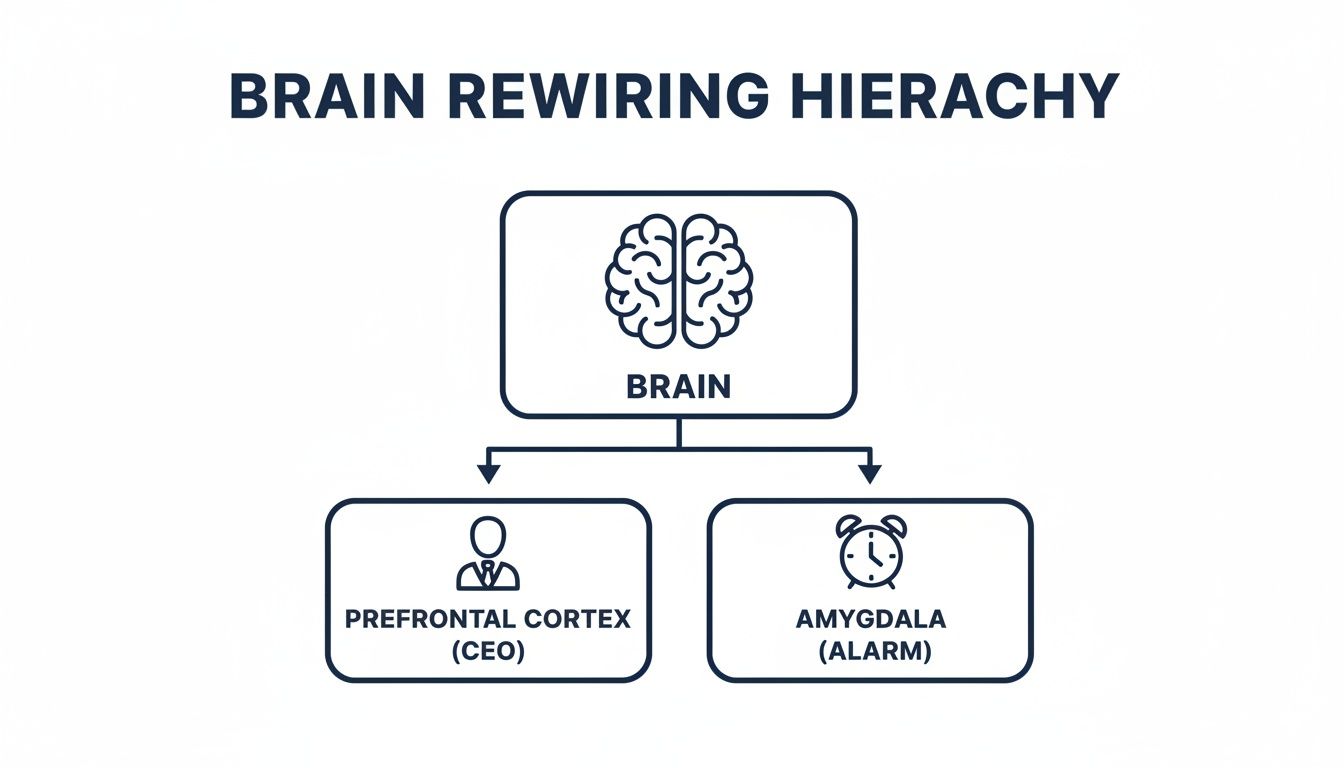
This rewiring process is what makes these therapies so effective for building resilience.
Comparing MBSR and MBCT
To make the distinction clearer, here’s a simple side-by-side look at the two programs.
| Feature | Mindfulness-Based Stress Reduction (MBSR) | Mindfulness-Based Cognitive Therapy (MBCT) |
|---|---|---|
| Primary Goal | To reduce general stress, anxiety, and manage chronic pain. | To prevent the relapse of major depression. |
| Target Audience | Anyone dealing with stress from illness, pain, or daily life. | Individuals with a history of recurrent depressive episodes. |
| Core Method | Builds foundational mindfulness skills for broad application. | Integrates mindfulness with cognitive therapy techniques. |
| Focus | Cultivating present-moment awareness of all experiences. | Recognizing and relating differently to negative thought patterns. |
Ultimately, both paths lead to greater self-awareness and emotional freedom.
Choosing Your Path
So, how do you decide? It really comes down to what you need most right now.
-
Go with MBSR if: You're looking to build a solid foundation in mindfulness to handle life's general ups and downs, manage stress better, or cope with physical discomfort. It’s an excellent starting point for just about anyone.
-
Lean toward MBCT if: Your primary concern is breaking a cycle of recurring depression. If you know your triggers often involve getting caught in webs of negative thinking, MBCT offers a targeted strategy to get ahead of them.
In the end, there’s no wrong choice. Both MBSR and MBCT offer life-changing skills. Here in Massachusetts, many addiction treatment programs borrow elements from both to give clients a more complete toolkit for recovery, helping them manage everything from daily stressors to the specific mental health challenges that fuel addiction.
A Look Inside A Mindfulness Therapy Session
Walking into any therapy session for the first time can feel a little nerve-wracking. What actually goes on in there? When it comes to mindfulness-based therapy, especially in an outpatient addiction setting in Massachusetts, you can set aside any old-fashioned, clinical stereotypes. The reality is a space that feels supportive and is built for learning and self-discovery.
Most of these sessions take place in a group, which immediately creates a powerful sense of community. It’s a reminder that you're not on this journey by yourself. The therapist leading the session acts less like a lecturer and more like a skilled guide, leading everyone through practices and making sure the room feels safe and free of judgment.
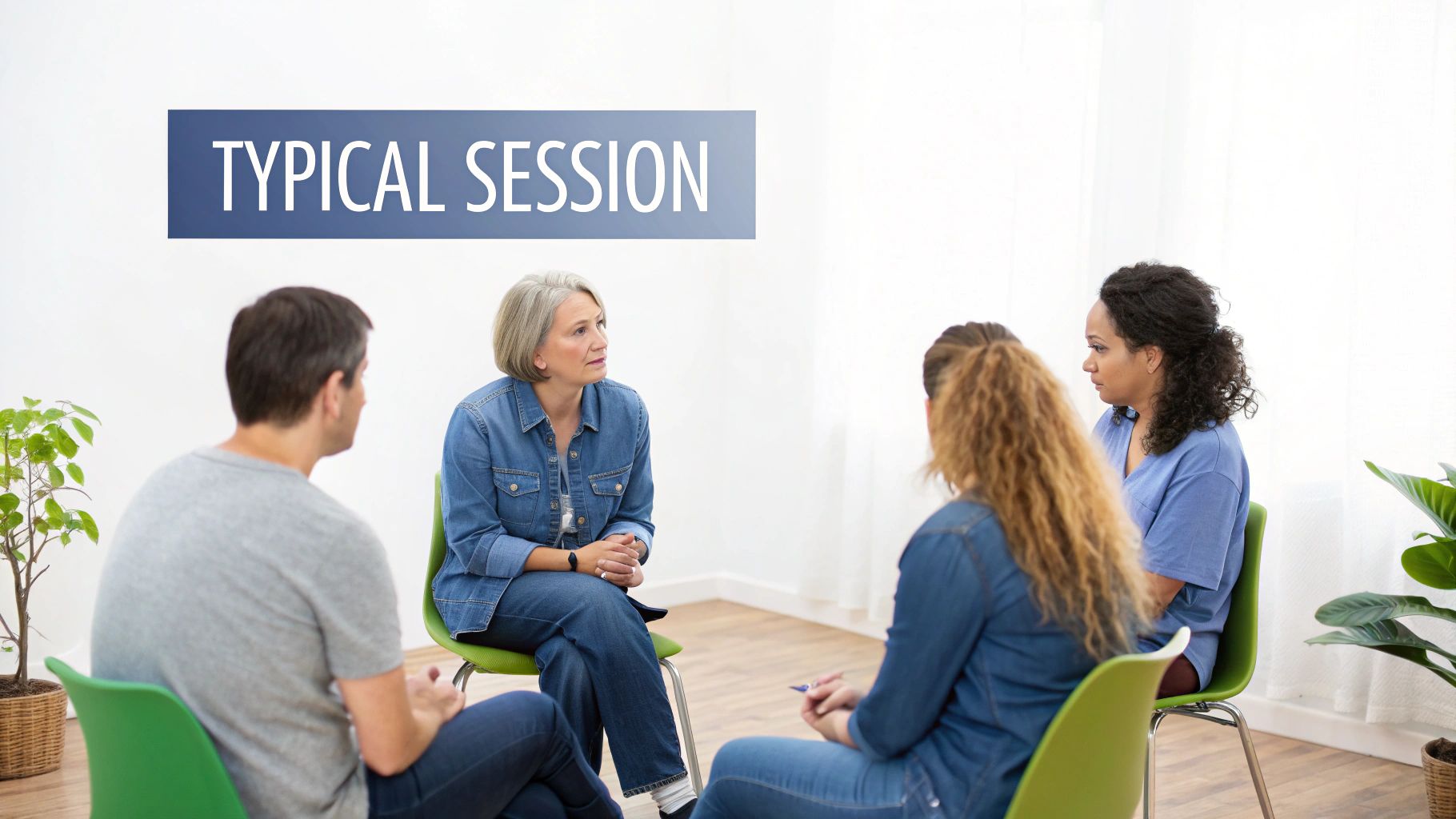
Core Components of a Session
A typical session is a blend of guided practice, very gentle movement, and open, reflective conversation. The point isn’t to force yourself into some perfect state of zen; it’s simply to practice the skill of bringing your attention back to the present moment, over and over again.
Here’s a glimpse of what you can expect:
- Guided Meditations: Many sessions kick off with a guided practice like a body scan meditation. The facilitator will gently guide your attention to different parts of your body, asking you to simply notice any sensations—tingling, warmth, tightness—without feeling like you have to fix or change them.
- Mindful Movement: This is far from a workout. Think simple, easy stretches or slow, deliberate walking. The goal is to build a stronger connection between your mind and body and grow more aware of physical feelings as they happen.
- Group Discussion: A huge part of the session is dedicated to sharing. This is where you can talk about what the mindfulness practices felt like, what challenges popped up, and how you might use these skills to navigate real-world triggers, like an unexpected craving or a spike in anxiety.
The core principle is progress, not perfection. Mindfulness therapy is a space where you learn to be kinder to yourself, observing your inner world with curiosity rather than criticism. This compassionate approach is a powerful tool for healing.
The entire experience is structured to take the mystery out of mindfulness and turn it into a practical tool you can use every day. As you practice these exercises alongside others, you begin to see that you have the ability to observe your thoughts and feelings without letting them control you. This builds a strong foundation for a lasting recovery.
Simple Mindfulness Exercises You Can Start Today
You don’t have to wait for your first therapy appointment to start feeling the benefits of mindfulness. The real power of these techniques is how simple and accessible they are. Think of it as building a new muscle—the "mindfulness muscle"—that you can start strengthening right now.
These are practical, real-world tools for managing stress, staying grounded when cravings hit, and connecting more deeply with the present moment.
Each exercise is designed to be short but powerful. They’re a way to bring a little calm into your day, especially when life feels chaotic or overwhelming.
The 3-Minute Breathing Space
Consider this your emergency reset button. It’s a fantastic technique for stepping out of a spiral of automatic, negative thoughts and finding your footing again. It’s just three minutes, broken into three simple steps.
- Step One: Acknowledge. For the first minute, just check in with yourself. Ask, "What's going on with me right now?" Gently notice whatever thoughts, feelings, and physical sensations are present. No judgment, just awareness.
- Step Two: Gather. In the second minute, narrow your focus and bring all your attention to the physical sensation of your breath. Feel the air coming in, and feel it going out. This acts as an anchor to the here and now.
- Step Three: Expand. For the last minute, allow your awareness to widen again. Feel the breath, but also notice your whole body—your posture, your facial expression, the feeling of your feet on the floor. Hold this broader awareness as you get ready to move back into your day.
The Basic Body Scan
Ever feel totally disconnected from your body or stuck in your head? The body scan is the perfect antidote. It’s a grounding exercise that rebuilds the crucial connection between your mind and body.
The point of a body scan isn't to fix or change anything you're feeling. It’s about paying attention to what's already there with a sense of gentle curiosity. This non-judgmental awareness is a cornerstone of recovery.
Find a comfortable spot to lie down and close your eyes. Start by bringing your attention all the way down to the toes of your left foot. What do you feel? Warmth? Tingling? Numbness? Whatever it is, just notice it.
Slowly, move that spotlight of awareness up your left leg, then over to your right foot, and all the way up your right leg. Continue this process through your torso, arms, and head until you've checked in with your entire body.
Mindful Listening
This practice turns a normal, everyday activity—a conversation—into a powerful mindfulness exercise. It’s a great way to quiet your own mental chatter and genuinely connect with another person.
The next time you’re talking with someone, make a conscious decision to really listen.
Try to catch your mind when it starts planning what you’ll say next or drifts off to your to-do list. When it does, gently guide your focus back to the other person's words, their tone of voice, and even their body language.
This simple shift can fundamentally change the quality of your conversations and strengthen your relationships—a vital source of support for anyone in recovery, especially those in outpatient programs across Massachusetts.
Finding Mindfulness-Based Therapy In Massachusetts
Okay, so you see the value in mindfulness-based therapy. That’s a huge first step. But knowing it can help and actually finding the right program are two different things. For those of us here in Massachusetts, especially on the South Shore, the good news is that accessing high-quality outpatient care that uses these techniques is easier than ever.
The trick is to look for treatment centers that don’t just offer mindfulness in a vacuum. The most effective programs weave it together with other proven methods, like Cognitive Behavioral Therapy (CBT) and Dialectical Behavior Therapy (DBT). This integrated approach is a game-changer for anyone who needs dual diagnosis support, as it tackles both addiction and any co-occurring mental health challenges at the same time. You can get a better sense of how this all fits together on our page about mental health treatment in Massachusetts.
What to Expect When Seeking Care
Getting started is usually as simple as making a phone call. Your first point of contact will likely be a confidential assessment where you can talk openly about what’s going on. This is your chance to learn about the different program options, like a Partial Hospitalization Program (PHP) or an Intensive Outpatient Program (IOP), and figure out what makes sense for your life. It’s also when you’ll get help verifying your insurance benefits to see what’s covered.
Finding the right fit is about more than just the therapy type; it's about finding a supportive environment where you feel seen, heard, and respected throughout your recovery journey.
It's reassuring to know that the U.S. is a hub for this work—in fact, it's home to 70% of global trials on mindfulness. Here in Massachusetts, state licensing ensures that providers are delivering these therapies according to proven, effective standards. This makes mindfulness a powerful and cost-effective tool for individuals and families looking to build lasting resilience. If you're interested in the research, you can learn more about the findings here.
Key Takeaways for Finding a Program
When you're ready to look for a program, keep these points in mind:
- Look for Integrated Care: A center that combines mindfulness with staples like CBT and DBT offers a much more robust path to recovery.
- Verify Your Insurance: Don't go it alone. A quality provider will have a team dedicated to helping you understand and maximize your insurance benefits.
- Understand Program Levels: Ask about the differences between Day Treatment (PHP) and Intensive Outpatient (IOP) to find the right intensity for your needs.
- Inquire About the Intake Process: A clear, compassionate, and supportive intake process is often a great indicator of the quality of care you'll receive.
Frequently Asked Questions

Is Mindfulness The Same Thing As Meditation?
No, but they are closely related. Think of mindfulness as the quality of being present and aware, while meditation is the formal exercise you do to strengthen that quality. You can be mindful anytime, but meditation is a specific time set aside for practice.
Do I Have To Be Religious Or Spiritual To Practice Mindfulness?
Absolutely not. While mindfulness has roots in ancient contemplative practices, modern mindfulness-based therapies are completely secular and based on psychology and neuroscience. They were developed by doctors in clinical settings and require no religious or spiritual beliefs.
How Long Does It Take To Feel The Benefits?
Many people report feeling calmer and more in control within just a few weeks of consistent practice. The standard 8-week mindfulness programs offered in many Massachusetts treatment centers are designed to create noticeable shifts in that timeframe. Consistency is key; a little practice each day is more effective than one long session per week.
