
Ask someone what sobriety means, and they'll probably tell you it's about quitting drinking or drugs. That’s the starting point, for sure, but it's only a tiny piece of a much bigger picture. True sobriety isn’t just about stopping something; it’s about starting a whole new way of life. It’s a complete shift focused on rebuilding your physical health, finding mental clarity, and achieving a sense of genuine emotional balance. It’s less about what you give up and more about everything you gain.
Key Takeaways
Before we get into the details, here are the four most important ideas to keep in mind:
- Sobriety is a personal journey, not a one-size-fits-all definition. Your path is your own, shaped by your unique experiences, needs, and goals.
- The health benefits of sobriety transform your mind and body. The positive changes, from better sleep and more energy to improved mental health, are profound.
- A strong support system is essential for long-term success. Nobody does this alone. Lasting recovery is built on a foundation of professional guidance, peer support, and family connection.
- Recovery is achievable with professional help available in Massachusetts. Expert outpatient programs provide the structure, therapy, and skills you need to build a healthier future.
Defining Sobriety Beyond Simple Abstinence
Getting sober is about more than just the absence of a substance—it's about the presence of a new way of living.
Think of it this way: just stopping use is like pulling all the weeds out of an overgrown garden. That's the first and most necessary step. But real, lasting sobriety is the patient work that follows—tilling the soil, planting new seeds, and tending to the garden so it can flourish. It means nurturing your physical health, sharpening your mind, and learning to navigate your emotions without a chemical crutch.

This journey is deeply personal and looks different for everyone. For many, it means total abstinence. For others, it might involve Medication-Assisted Treatment (MAT) as part of a harm-reduction approach. The goal, however, is always the same: to actively build a life where you are thriving, not just surviving.
True recovery is a process of change through which individuals improve their health and wellness, live a self-directed life, and strive to reach their full potential. It's about learning how to live fully, not just how to stop using.
This guide is designed to walk you through what that journey really looks like. We'll explore the different paths you can take, the incredible benefits you'll discover along the way, and the practical steps for getting the right support—especially for those in Massachusetts looking for compassionate, expert care.
Choosing Your Path: Abstinence vs. Harm Reduction
When you start thinking about what sobriety means to you, it's important to know there isn't just one road to recovery. Two main philosophies usually guide the journey: total abstinence and harm reduction. Neither one is inherently better than the other; they're just different frameworks for creating change. The right choice really comes down to your own circumstances, goals, and what feels right for you.
Think of it like getting in shape. Some people find success by completely overhauling their diet overnight—cutting out all sugar and junk food, cold turkey. This is a lot like total abstinence, where the goal is to stop using all mood-altering substances completely. This creates a very clear, black-and-white boundary that many find incredibly helpful for building a new foundation in recovery.
For other people, a more gradual approach feels more manageable. They might work with a nutritionist to slowly phase out unhealthy foods while bringing in better alternatives, focusing on making steady progress instead of achieving instant perfection. This is the core idea behind the harm reduction model, which is all about minimizing the negative fallout from substance use. It’s a pragmatic philosophy that meets people exactly where they are.
The Abstinence Model: A Clear Boundary
For a long time, the abstinence model has been the bedrock of recovery, especially in traditional 12-Step programs. The principle is simple and direct: to achieve a lasting recovery, a person stops using alcohol and any other non-prescribed drugs entirely. This approach gets rid of the gray area and the exhausting mental debate of "how much is too much?" It helps break the powerful physical and psychological cycles of addiction.
The power of this approach lies in its simplicity. It makes decisions in tricky situations much easier because the answer is always a firm "no." That kind of clarity can be a huge relief, giving you a solid platform to start rebuilding your life.
One of the challenges, though, can be the intense guilt and shame that bubble up after a slip or relapse. Learning how to process the feelings that come with breaking that commitment to total sobriety is a crucial part of the journey. In fact, there's a name for this experience—you can learn more about navigating it by understanding the abstinence violation effect.
Harm Reduction: A Focus on Progress
Harm reduction is a practical, compassionate approach that’s focused on reducing the dangerous consequences of substance use, even if complete abstinence isn't the immediate goal. This philosophy recognizes that for many people, quitting abruptly just isn't realistic or even possible at a given moment. Instead, the focus shifts to taking positive steps—no matter how small they seem—to improve health and safety.
A key part of this model is Medication-Assisted Treatment (MAT). This involves using FDA-approved medications together with counseling and behavioral therapy. For example, medications like buprenorphine or naltrexone can significantly dial down the cravings and withdrawal symptoms for opioids and alcohol. This gives people the stability they need to fully engage in therapy and start making healthier choices.
Harm reduction is about fostering any positive change. It’s a health-centered approach that affirms the dignity and worth of every person, celebrating incremental progress on the path to wellness.
This model is especially vital in places like Massachusetts, where outpatient centers are set up to offer MAT as a life-saving tool. It helps people stabilize their lives, lower their risk of overdose, and gradually build the skills they need for a long-term recovery.
Finding the Right Fit in Massachusetts
At the end of the day, the debate isn’t about which model is “better” in general—it’s about which one is better for you. In Massachusetts, leading treatment providers like South Shore Recovery Center understand that personalized care is everything. We offer programs that can support both paths, making sure that your treatment plan is built around you, not the other way around.
Whether a person chooses abstinence or a harm reduction strategy, the goal is the same: to improve health, restore well-being, and build a fulfilling life free from the destructive grip of addiction. The most effective approach is always the one you can stick with, the one that helps you move forward, one day at a time.
What You Gain From Sobriety: A Life Transformed
When people think about getting sober, they often focus on what they have to give up. The substance, the old habits, maybe even certain social circles. But that’s only a tiny fraction of the story.
The real story—the one that truly defines what it means to be sober—is about everything you gain. It’s a powerful rediscovery of your physical health, your mental clarity, and the relationships that matter most. This isn't about subtracting something from your life; it’s about finally adding yourself back into it.
Let's look at what that new, vibrant life actually looks like.
Waking Up to Better Physical Health
One of the first things people notice in sobriety is how much better they feel physically. Sometimes, it happens almost immediately. Once your body is no longer working overtime to process alcohol or other substances, it gets a chance to start healing.
Sleep often improves dramatically. Instead of tossing and turning or waking up groggy, you start getting deep, restorative rest. That renewed energy spills over into the rest of your day. Simple things like taking a walk or picking up an old hobby become enjoyable again, not just another chore. Your body, freed from a constant toxic burden, begins to repair itself from the inside out. You might notice clearer skin, better digestion, and a general sense of wellness you haven't felt in years.
The health impact is no small thing. The World Health Organization has found that alcohol is a major global health issue. Annually, around 3 million deaths worldwide—or 5.3% of all deaths—are attributable to alcohol. For young adults aged 20 to 39, the numbers are even more stark: a staggering 13% of all deaths are alcohol-related. You can read more about these critical global alcohol consumption findings from the WHO.
Finding Mental and Emotional Peace
The physical benefits are incredible, but the mental shift is just as profound. Active addiction often feels like living in a constant storm of anxiety, guilt, and racing thoughts. Sobriety slowly but surely quiets that noise.
As the mental fog lifts, you start to notice the little things again—the real taste of your morning coffee, the sound of birds chirping, the feeling of a genuine, belly-deep laugh. Your focus returns, making it easier to tackle tasks at work or at home without feeling completely overwhelmed. Making decisions becomes simpler when you're not constantly being pulled in one direction by cravings.
Sobriety isn't just about not being under the influence; it's about being present in your own life. It’s the return of your ability to think clearly, feel deeply, and navigate challenges with a resilient mindset.
This mental renewal doesn't happen in a vacuum. It's often supported by therapies that treat the whole person, not just the addiction. Many people find that pairing their recovery with practices that connect the mind and body is the key to lasting change. Approaches found in holistic addiction treatment are designed to build this exact kind of strong, integrated foundation for wellness.
Rebuilding Relationships and Financial Security
Perhaps the most rewarding part of sobriety is watching your relationships and your sense of security come back to life. Addiction has a way of eroding trust and creating distance between you and the people you care about most. Sobriety gives you the chance to start mending those connections.
As you become more reliable, present, and emotionally available, you can slowly rebuild that trust with family and friends. Those bonds don't just heal; they often become stronger than ever.
The same positive ripple effect extends to your finances and career.
- At Work: With improved focus and dependability, your job performance can soar, opening up new opportunities.
- Financially: When money isn't being funneled toward a substance, you can finally get your footing. You can start saving, paying down debt, and relieving the crushing financial stress that so often goes hand-in-hand with addiction.
This process of rebuilding turns a life of chaos into one of purpose and stability. It's about so much more than just abstaining—it's about creating a life that you are genuinely excited to live.
A Realistic Look at the Stages of Sobriety
Think of recovery less like a sprint and more like learning to walk again after a serious injury. You wouldn't expect to be running marathons the day after surgery, right? The same idea applies here. Sobriety isn't a one-time event; it's a process that unfolds in stages, each with its own unique hurdles and victories.
Knowing what to expect can make the whole journey feel more manageable. This isn't a strict timetable, but more of a roadmap to help you see where you are, anticipate what’s coming next, and recognize just how far you’ve come. Everyone's pace is different—what truly matters is your commitment to taking that next step forward.
The Initial Days and Weeks: Withdrawal and Early Abstinence
The first leg of the journey is all about physical stabilization. Lasting anywhere from a few days to a couple of weeks, this is when your body has to relearn how to function without the substance it came to depend on. This withdrawal period can be the most physically and emotionally intense part of the entire process.
You’ll likely face intense cravings, unpredictable mood swings, and just plain exhaustion. It can be incredibly uncomfortable, which is why having medically supervised support through a detox or outpatient program is so critical. The goal here is simple: get through it safely with as much professional support as you can gather.
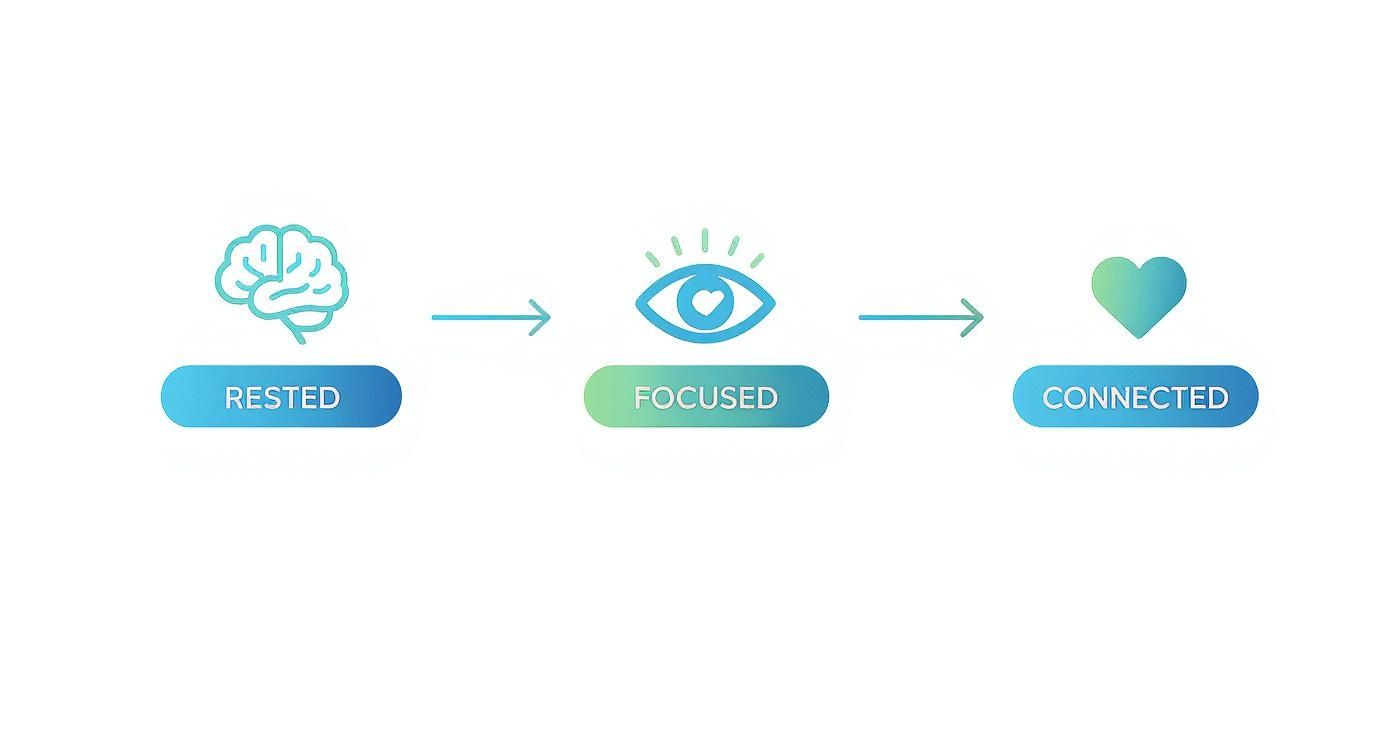
This is the start of a journey toward greater well-being, where the initial focus on physical health broadens over time to encompass mental clarity and deeper human connection.
The First Few Months: Building a New Foundation
Once the storm of acute withdrawal passes, you enter what’s often called early sobriety. This phase typically lasts for the first 90 days to six months. Your body is still healing, and the initial high of being substance-free—sometimes called the "pink cloud"—might start to fade, making way for the real work of recovery. This is where you lay the bricks for a new way of life.
This stage is all about learning and practicing new ways to cope with life on life’s terms. It means getting real about:
- Identifying Your Triggers: Pinpointing the people, places, and feelings that make you want to use.
- Building New Routines: Actively replacing old, harmful habits with structured, healthy activities.
- Diving into Therapy: Working with a professional to finally get at the root causes of your addiction.
This is also when something called Post-Acute Withdrawal Syndrome (PAWS) can show up, bringing lingering symptoms like moodiness and trouble sleeping. Having a solid support network from an outpatient program and peer groups is your lifeline here, helping you navigate the waves without getting pulled off course.
Six Months and Beyond: Maintaining and Thriving
After the six-month mark, you transition into a maintenance phase. The constant, moment-by-moment battle often eases up, and your focus shifts toward cementing your new lifestyle and learning to navigate potential relapse risks. Sobriety begins to feel less like a full-time job and more like your new normal.
The work definitely continues, but it changes. Now, it’s about deepening self-awareness, mending damaged relationships, and exploring personal growth. It’s about setting goals that might have seemed impossible before—like finishing a degree, advancing in your career, or just finding joy in a new hobby.
Long-term sobriety isn’t just about not using; it’s about consciously building a life that is so fulfilling and resilient that you no longer need or want to escape from it.
Staying connected to your support system is key. Life will always throw curveballs, but by this point, you've built a powerful toolkit of healthy coping skills. That’s the real meaning of sobriety: not just freedom from a substance, but the freedom to create a life of purpose and meaning.
To help you visualize this journey, here’s a breakdown of what you can generally expect at each stage, along with common challenges and proven strategies to help you succeed.
A Realistic Look at the Stages of Sobriety
| Recovery Stage | Typical Duration | Common Challenges | Effective Strategies |
|---|---|---|---|
| Early Abstinence | 1-2 weeks | Intense cravings, physical discomfort, mood swings, fatigue. | Medically-supervised detox, structured outpatient support, hydration, and rest. |
| Early Sobriety | 1-6 months | Post-Acute Withdrawal Syndrome (PAWS), emotional volatility, boredom, high relapse risk. | Individual/group therapy, identifying triggers, building new routines, peer support groups (AA/NA). |
| Maintenance | 6 months+ | Complacency, relationship challenges, life stressors, managing long-term mental health. | Ongoing therapy, sponsoring others, pursuing new hobbies and goals, consistent self-care practices. |
| Advanced Recovery | 1 year+ | Deeper existential questions, personal growth plateaus, finding new purpose. | Setting long-term life goals, repairing relationships, spiritual exploration, giving back to the community. |
Remember, this table is a guide, not a rulebook. Your journey is your own, and progress is what matters, not perfection.
Building a Support System That Actually Supports You
Trying to get sober can feel like setting out to climb a mountain. Even if you have all the right gear and a map, going it alone is a massive, unnecessary risk. That’s why a solid support system isn't just a nice idea—it’s the foundation for making sobriety stick.
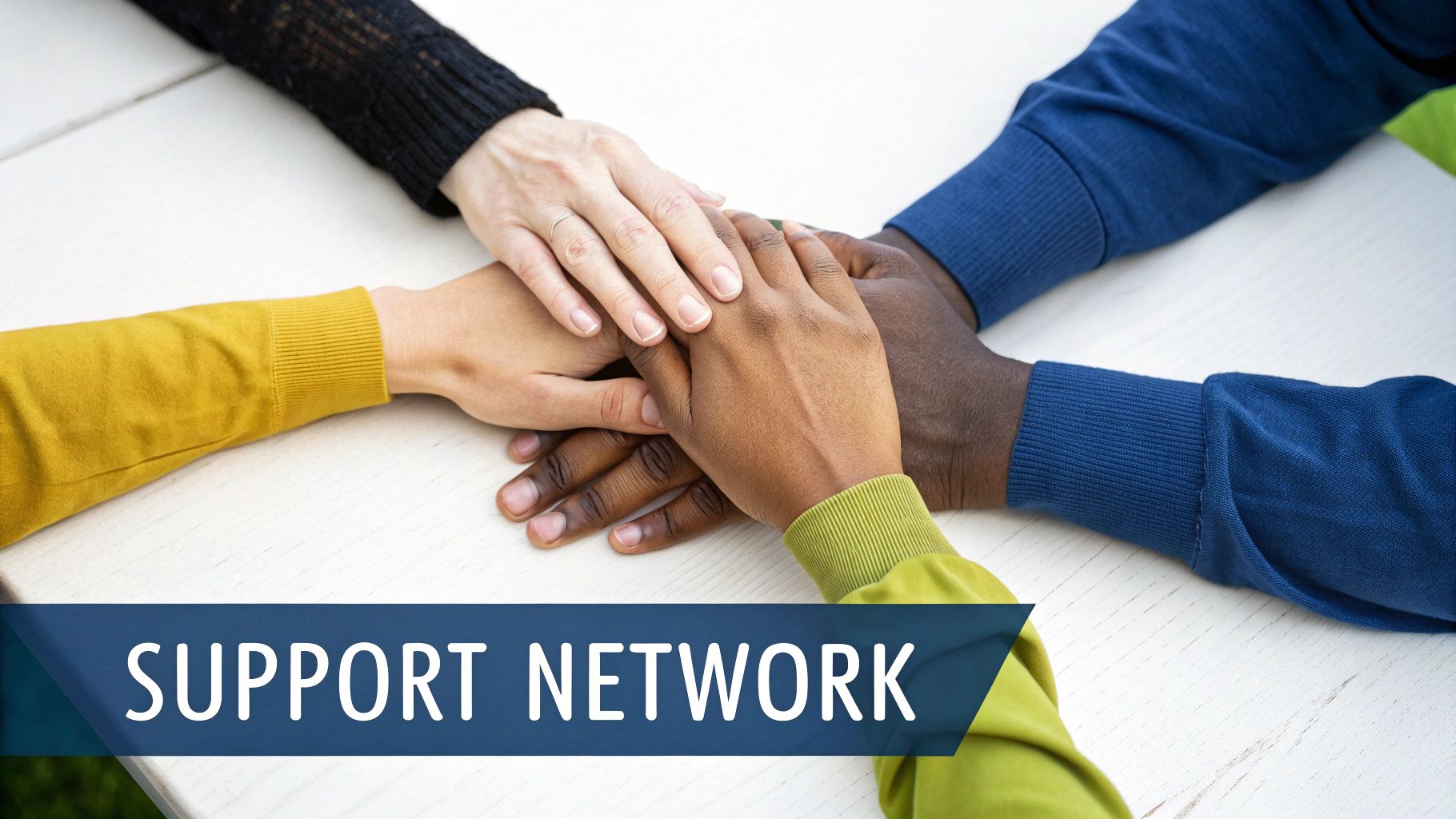
A huge part of what sobriety really means is swapping the isolation of addiction for genuine human connection. Building that network of people who have your back is one of the most powerful things you can do for your recovery.
The Pillars of a Strong Recovery Network
An effective support system isn’t just one person you can call. Think of it more like a web of different people and resources, each offering a unique kind of strength and ready to catch you if you stumble. The strongest networks are built on a mix of professional guidance, peer solidarity, and personal relationships.
Here’s what a well-rounded support network usually looks like:
- Structured Professional Help: This is your team of experts—therapists, counselors, and outpatient programs like the ones here at South Shore Recovery Center in Massachusetts. They give you proven, evidence-based tools in a safe, structured setting.
- Peer Support Groups: These are the people who are climbing the same mountain. Groups like Alcoholics Anonymous (AA), Narcotics Anonymous (NA), and SMART Recovery provide a space to share stories, get real-world advice, and find hope from others who just get it.
- Family and Sober Friends: This is your home base. Supportive loved ones can provide crucial encouragement, while friends who are also sober offer a social life that isn't built around using.
Finding Your Community in Massachusetts
If you're in Massachusetts, the great news is that these resources are all around you. You can find local AA and NA meetings happening every single day across the South Shore and the rest of the state. A quick online search for meetings in your town is all it takes to get started.
Outpatient programs are another fantastic way to build an instant, structured community. Group therapy is a central part of what we do, creating a space for you to connect with others navigating similar struggles. We also offer family therapy to help mend relationships and teach your loved ones how they can best support you. This is where you develop real-world skills to handle triggers, and learning how CBT can be applied in addiction treatment is a game-changer for developing healthy coping strategies.
"A process of change through which individuals improve their health and wellness, live a self-directed life, and strive to reach their full potential." – SAMHSA's definition of recovery, which underscores that recovery is a journey of growth, not just abstinence.
The Social Side of Sobriety
Building a network isn't just about getting help; it's about rebuilding your social life. Consider that around 14 million adults in the U.S. have an alcohol use disorder. The need for supportive, community-focused recovery has never been clearer.
Sobriety is about a complete lifestyle change—a shift toward mental and emotional wellness that is fueled by positive social connections. It's about learning to live a full life, and you don't have to do it alone. You can find more details in this report about alcohol use statistics in the US.
How to Take Your First Step Toward Recovery in Massachusetts
Realizing you need help is a monumental first step. But what comes next? It's easy to feel lost, but the path forward starts with a single, simple action.
This might be an honest conversation with a friend or family member you trust. For many, it's making a confidential call to a professional who understands. What you’ll discover is a community of people ready to help, not judge.
Picking up the phone to call a treatment center can feel like the hardest thing you'll ever do. But that one call opens the door to a structured, supportive environment designed to meet you exactly where you are today.
Understanding Your Outpatient Options
Here in Massachusetts, outpatient programs offer a great balance of intensive care and real-world flexibility. You get to live at home, stay connected to your life, and build a solid foundation for recovery all at the same time.
Two of the most common programs you'll find are the Partial Hospitalization Program and the Intensive Outpatient Program.
-
Partial Hospitalization Program (PHP): Think of this as the most comprehensive level of outpatient care. It's a significant commitment—several hours a day, five days a week—that provides the structure and intensity many people need to get started.
-
Intensive Outpatient Program (IOP): This is a step down in terms of time, but not in terms of support. An IOP usually involves a few hours of treatment, three to five days a week, making it easier to manage alongside work, school, or family life.
Taking the first step isn't about having it all figured out. It's about being willing to ask for a map. Professional outpatient care provides that guidance, one day at a time.
Both PHP and IOP are powerful tools for building the skills and support networks essential for lasting sobriety. They use proven methods like Cognitive Behavioral Therapy (CBT) and group counseling to help you identify your triggers and learn healthier ways to cope.
The right program is the one that fits your specific needs. At South Shore Recovery Center, we start with a thorough, confidential assessment to figure out which level of care will give you the best chance at success. Our goal is simple: to replace the fear of the unknown with the empowerment that comes from knowing expert help is just a phone call away.
Your Questions About Sobriety, Answered
Thinking about sobriety brings up a lot of questions. It's only natural. Below, we’ve tackled some of the most common ones we hear, offering the straightforward, compassionate answers you need as you think about what's next.
Do I Have to Hit "Rock Bottom" to Get Sober?
This is one of the most persistent and damaging myths out there, and the simple answer is no, absolutely not. You don’t have to lose everything to decide you want a better life.
Many people choose sobriety to get ahead of potential problems, to feel healthier, or just to be more present for the people and moments that matter. The right time to ask for help is the moment you feel substance use is holding you back, even in small ways.
What if I Relapse?
First, let's be clear: relapse is not a sign of failure. For many, it's a part of the recovery process. Think of it as a signal that your current recovery plan needs a tune-up—a chance to learn more about your triggers and develop stronger coping skills for the future.
The most important thing to do if you relapse is to reach out for support immediately. Don't let shame or guilt isolate you.
A relapse is an event, not a verdict. It provides critical information for your long-term success and is a reason to lean on your support system, not pull away from it.
How Can I Possibly Socialize Without Alcohol or Drugs?
This is a very real and understandable worry. The truth is, your social life will change, but it often changes for the better. It starts with rediscovering old hobbies or finding new ones and connecting with people in settings that don’t revolve around substance use.
Many people find their friendships become deeper and more authentic. Sober communities, both online and right here in Massachusetts, are amazing places to build a new, rewarding social life. You might just be surprised how much more fun you can have when you’re fully present for it.
