

Starting recovery from addiction can feel like you’ve been dropped onto an unfamiliar, winding trail without a map. In this journey, a sponsor is your experienced guide—someone who has already walked the path, knows the terrain, and can help you find your way. They are a mentor, a confidant, and a powerful source of hope, offering firsthand wisdom you just can't get from a textbook.
Key Takeaways
- A Sponsor is a Guide, Not a Director: Their primary role is to guide you through the 12 Steps using their personal experience. They offer suggestions based on what worked for them, but they do not make decisions for you or act as a therapist.
- They Provide Accountability and Support: A sponsor is an accountability partner you can call daily, especially in early recovery. This consistent communication helps you stay connected to your program and navigate cravings and challenges in real-time.
- Healthy Boundaries are Essential: The relationship is strictly focused on recovery. It should never involve financial transactions, romantic interest, or professional advice (medical, legal). Confidentiality is the bedrock of trust.
- Sponsorship Complements Professional Treatment: A sponsor helps you apply the coping skills and strategies learned in clinical therapy to real-world situations, making outpatient treatment in places like Massachusetts more effective.
A Trailblazer on Your Path to Sobriety
Think of a sponsor as a recovery trailblazer. They’ve already navigated the very challenges you're just beginning to face, and now they're here to help you do the same. This unique relationship is a cornerstone of many 12-Step programs, offering peer-to-peer support that beautifully complements formal treatment. It's not about being a therapist or offering financial aid; it's a genuine bond built on shared experience.
This kind of local connection is especially valuable in Massachusetts communities like Plymouth, where sponsors can plug you into a strong, sober network right in your own backyard.
What a Sponsor Actually Does
A sponsor is so much more than just a friendly ear. They become an active partner in your early recovery, providing practical guidance and steady, unwavering encouragement. Their main job is to help you work through the 12 Steps, the framework that builds a foundation for long-term sobriety. A huge part of this involves them sharing their own stories of overcoming hurdles just like yours.
This model of peer support and lived experience is woven into the fabric of modern recovery. In fact, data shows that by 2017, an impressive 83% of specialty addiction treatment facilities offered family counseling—services that lean on similar principles of support and accountability. You can find more data on quality addiction treatment practices from RTI International.
A sponsor is living proof that recovery is possible. They don't just tell you how to get through it; they show you, using their own journey as the map. Their primary job is to guide, not dictate.
And that guidance is absolutely crucial. A sponsor helps you sidestep common pitfalls, offers perspective when you feel lost or overwhelmed, and holds you accountable to the recovery goals you set. They're the person you call when a craving hits, when you have a small victory to celebrate, or when you just need to hear a voice that truly understands.
Their role is to offer suggestions based on what worked for them, which empowers you to start making healthy choices for yourself. This supportive structure is a huge reason why sponsorship is so effective for so many people.
The Core Responsibilities of a Sponsor
So, what does a sponsor actually do? It’s more than just being a friendly ear. A sponsor has a set of core responsibilities, practical things they do consistently to help you build a solid foundation for your sobriety. Think of them as an active guide, helping you put the principles of recovery into practice in your everyday life.
Their single most important job is guiding you through the 12 Steps. This is the absolute bedrock of programs like Alcoholics Anonymous and Narcotics Anonymous. Working the steps requires real honesty and can be incredibly challenging. A good sponsor has walked this path themselves, so they can help you tackle the tough parts, like doing a "searching and fearless moral inventory" in Step 4 or making amends in Step 9. They’ve been there, so they understand the emotional roadblocks and can offer real-world advice on how to get through them.
Communication and Accountability
The lifeline of any good sponsorship is consistent communication. It's very common for sponsors to ask the person they're sponsoring to call them every single day, especially in the early stages of recovery. This isn't about micromanaging you. It's about creating a powerful accountability checkpoint that keeps you plugged into your program, gives you a chance to talk through cravings before they get out of hand, and helps you build a daily routine with recovery at its center.
This regular contact does something else, too—it gives you perspective. When sponsors share their own stories of struggle and victory, it makes the whole process feel less isolating. Hearing that someone else had the same fears or temptations you're having—and got through it sober—is incredibly powerful. It provides real, tangible hope. This is especially true here in Massachusetts, where a local sponsor can connect you with a strong recovery community right here on the South Shore.
A Guide, Not a Director
It's absolutely critical to understand that a sponsor offers suggestions, not commands. They are not your therapist, your financial advisor, or your boss. Their guidance is rooted entirely in their own experience with the 12 Steps and what has worked for them in living a sober life.
A sponsor’s role is to hold up a mirror, helping you see your own path more clearly. They might say, "Here's what I did when I was in your situation," but the decision to follow that suggestion is always yours.
To really nail down these important roles and boundaries, it helps to see a side-by-side comparison of a sponsor's primary dos and don'ts.
Here's a straightforward table that breaks down what you can expect from a sponsor—and what falls outside their role.
A Sponsor's Role Dos and Don'ts
| What a Sponsor Does (Do) | What a Sponsor Does Not Do (Don't) |
|---|---|
| Guide you through the 12 Steps. | Act as a licensed therapist or counselor. |
| Share their personal experience, strength, and hope. | Lend you money or get involved in your finances. |
| Be available for regular calls and support. | Make life decisions for you or give commands. |
| Encourage attendance at meetings. | Serve as a legal or medical professional. |
| Hold you accountable to your recovery goals. | Break your confidentiality or gossip. |
Understanding this distinction is key to a healthy and effective sponsorship. Their focus is singular: to help you achieve and maintain sobriety by working a program of recovery.
How Sponsorship Strengthens Professional Treatment
Sponsorship acts as the perfect bridge, connecting the structured, safe world of clinical treatment with the messy, unpredictable reality of daily life. It’s what helps you take the lessons from therapy and actually put them into practice when it counts. For anyone in an outpatient program here in Massachusetts, having a sponsor’s support makes the professional care they receive infinitely more effective.
Think of it this way: your therapist gives you the blueprint and the tools for building a sober life. Your sponsor is the experienced contractor who shows you how to use those tools on the job site. When a sudden craving hits or a tough situation arises, a sponsor is right there on the phone, offering immediate, practical advice on how to use the coping skills you learned in CBT or DBT. It’s this kind of real-world mentorship that turns abstract knowledge into muscle memory.
Putting Clinical Lessons Into Practice
This relationship is especially crucial for people navigating co-occurring mental health conditions. A sponsor helps with the day-to-day realities of managing both mental health and sobriety—a perspective that perfectly complements the clinical work being done in treatment. The impact is significant; programs that integrate strong sponsorship often see relapse rates fall by as much as 25-30%. This kind of hands-on guidance builds real resilience, much like the aftercare planning we emphasize for adults in Plymouth and beyond. For more on this, you can check out some of the quality tracking insights on RTI.org.
It's important to remember: a sponsor isn't a replacement for a therapist. They are a force multiplier. They reinforce the work done in therapy, acting as a real-time coach who helps you apply clinical strategies to everyday challenges.
Sponsorship also boosts the effectiveness of Medication-Assisted Treatment (MAT). While medications provide the physical stability needed to get started, a sponsor delivers the emotional support and accountability that are essential for building a completely new life. This one-two punch of medical care and peer mentorship creates a rock-solid foundation for lasting recovery.
The diagram below breaks down the three core functions a sponsor fulfills.
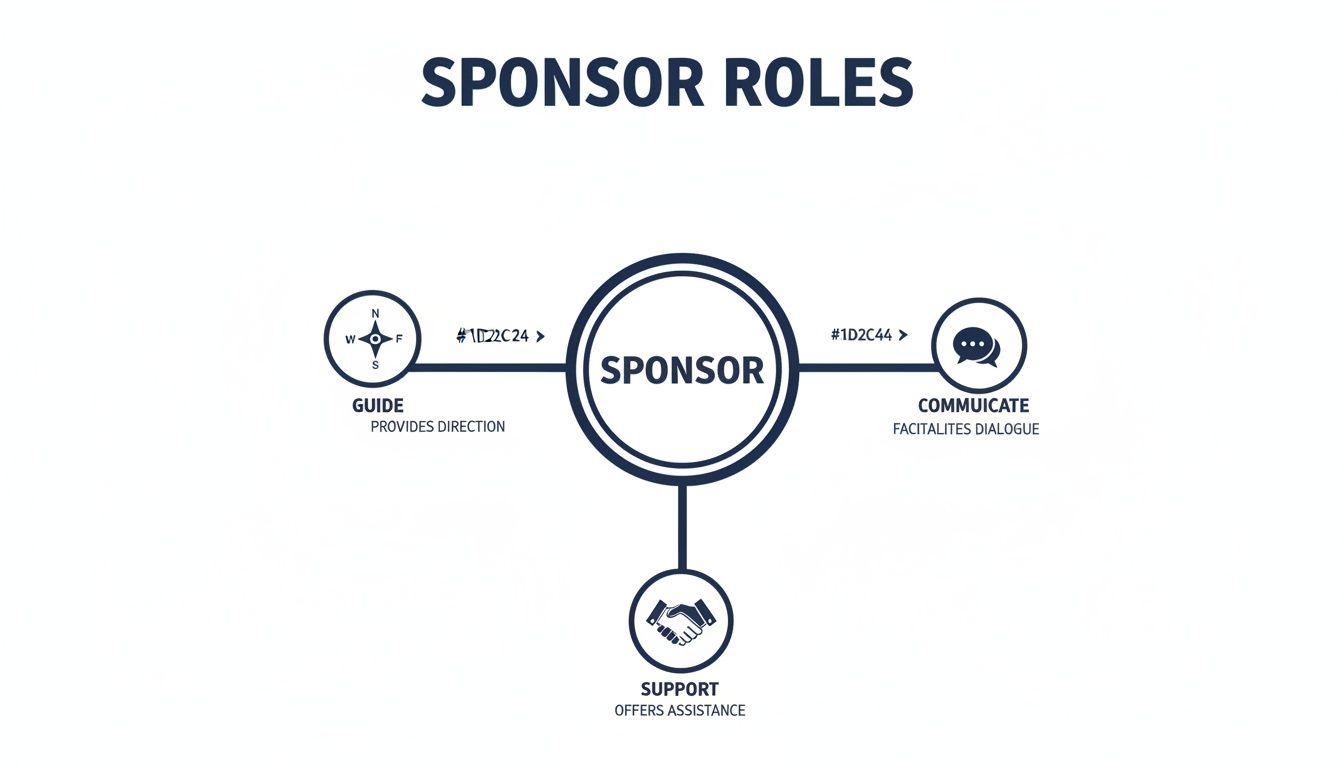
As you can see, guiding, communicating, and supporting are all interconnected. Together, they form the bedrock of a strong and healthy sponsorship relationship.
Local Support and Community Integration
For folks here on the South Shore, a sponsor is more than just a guide—they're a local lifeline. They know where the best meetings are, from Plymouth to Quincy. They can introduce you to a whole new network of sober friends and offer support that doesn’t end when the clinic doors close. This local connection is key to weaving yourself back into the fabric of the community in a healthy, positive way.
This kind of peer-led mentorship is fundamental to building a life in recovery. In fact, learning about 12-Step facilitation and immersion is an excellent way to see how our outpatient programs prepare you for this journey. A sponsor grounds the recovery process right where you live, making the transition from treatment to long-term sobriety feel much less daunting and a lot more achievable.
Finding the Right Sponsor for Your Journey
Choosing a sponsor is easily one of the most important decisions you’ll make in early recovery. This isn't about finding a new best friend; it's about finding a mentor—someone who has the kind of sobriety you admire and can guide you with real-world experience. This relationship is far too crucial to leave to chance, so taking your time to find the right fit is a must.
Essential Qualities of a Great Sponsor
When you're new, it's easy to get sidetracked by surface-level stuff, but the best sponsors all share a few core qualities. At the heart of it, you want someone who is actively, consistently working on their own recovery.
Here’s what you should really look for:
- They have their own sponsor: This is a huge sign. It shows they believe in the process and are committed to their own growth and accountability.
- They are actively working the 12 Steps: A sponsor’s main job is to walk you through the steps. They can only do that effectively if the steps are a living, breathing part of their own life.
- They have a quality of sobriety you respect: Time isn't everything. Look for someone who seems genuinely content, stable, and at peace in their recovery. That’s the real goal.
- They set clear boundaries: A good sponsor knows their role is to guide your recovery, not run your life. They respect the line between support and control.
How to Find and Approach a Potential Sponsor
So, where do you find this person? The best place is right in the rooms of 12-Step meetings. Whether you're in Plymouth or Worcester, meetings across Massachusetts are full of people with the kind of solid experience you need.
The key is to listen. Pay attention when people share their stories. If what someone says really hits home or you admire their perspective, they could be a great match.
When you feel ready to ask, don't overthink it. Just walk up to them after a meeting and keep it simple. Something like, "I'm looking for a sponsor and I really connected with what you shared. Would you be open to talking with me about that?" You can get a much deeper look into how this relationship works in our guide on what a sponsor is in AA.
Red Flags to Watch For
Knowing what to look for is only half the battle; knowing what to avoid is just as critical. A healthy sponsorship is built on mutual respect and has one focus: recovery.
Be cautious of anyone who tries to control your decisions, offers financial assistance, or makes you feel uncomfortable. Your sponsor should be a guide, not a director, and the relationship should always feel safe.
Here are some definite red flags that tell you this person isn't a healthy choice:
- Offering loans or financial help: A sponsor should never, ever be involved in your money.
- Controlling behavior: They have no business telling you who to date, where to work, or how to handle your family. That's your life.
- Romantic interest: Any kind of romantic or suggestive talk is a massive boundary violation. End it immediately.
- Criticizing other recovery paths: A good sponsor gets that everyone's journey is unique and respects different approaches to getting well.
If you run into any of these behaviors, the best move is to politely thank them for their time and keep looking. Finding the right sponsor is worth the effort—they will become an incredible source of support as you build a strong foundation for a new life.
Setting Healthy Boundaries in Sponsorship
Any good sponsorship is built on a foundation of mutual respect and really clear boundaries. Think of them like the guardrails on a winding mountain road; they keep the relationship safe, focused, and heading in the right direction—toward lasting recovery. Without those guardrails, even the best-intentioned partnership can slide into a ditch, becoming unhelpful or even damaging.
Laying out these ground rules right from the very beginning is one of the most important things a sponsor does. It protects the relationship and guarantees that its one and only focus stays squarely on recovery, creating a safe space for the sponsee to do the hard work of getting well.

Defining the Lines
The most crucial boundaries in any sponsorship relationship usually fall into a few specific areas. Getting a handle on these is just as important for the person being sponsored as it is for the sponsor.
- Financial Boundaries: This one is a hard and fast rule. A sponsor should never be a lender or a bank. Introducing money into the dynamic—either by asking for it or offering it—complicates things in a way that poisons the relationship's real purpose.
- Emotional Boundaries: A sponsor is a guide and a mentor, not a 24/7 crisis hotline or a potential romantic partner. While they offer incredible emotional support, they aren't trained to handle severe mental health emergencies. It's also critical that the relationship never, ever crosses the line into romance or any kind of inappropriate intimacy.
- Professional Boundaries: It’s vital to remember that a sponsor isn't a doctor, a licensed therapist, or a lawyer. They can share their own story and what worked for them, but they can't give out medical, clinical, or legal advice. That kind of guidance has to come from qualified, licensed professionals.
A healthy sponsorship is a supportive peer relationship built entirely around navigating the 12 Steps and learning to live a sober life. Its power is in its simplicity and its singular focus on recovery.
Confidentiality: The Bedrock of Trust
Trust is the currency of sponsorship, and it's built on the bedrock of confidentiality. This isn't just a casual agreement; it's a principle woven into the fabric of 12-Step traditions. What you share with your sponsor stays with your sponsor. Period. This sacred trust is what makes the kind of radical honesty needed to work a real program of recovery possible.
When someone knows their personal stories are safe, it creates the space they need to be truly vulnerable and start healing. This is also a key point for loved ones to grasp; learning how to support someone in recovery means respecting the privacy of these relationships, not trying to get in the middle of them.
In the end, strong boundaries and absolute confidentiality are what transform sponsorship from a casual friendship into a powerful, ethical partnership for long-term sobriety.
Frequently Asked Questions About Sponsorship
How soon should I get a sponsor?
It's recommended to start looking for a sponsor as soon as you begin attending 12-Step meetings, especially within the first few weeks. Early recovery is a critical time, and having a guide and support person right away can make a significant difference in building a strong foundation for sobriety.
What is the difference between a sponsor and a therapist?
A therapist is a licensed clinical professional who uses evidence-based practices to address the underlying psychological causes of addiction. A sponsor is a peer in recovery who acts as a mentor, using their personal experience to guide you through the 12 Steps. They are not a replacement for professional treatment but rather a vital supplement to it.
Can my sponsor help me with anxiety or depression?
A sponsor can offer valuable emotional support by sharing their own experience with co-occurring mental health challenges in recovery. However, they are not a mental health professional and cannot provide clinical treatment. It is essential to work with a licensed therapist or psychiatrist for conditions like anxiety and depression.
Do I have to pay a sponsor?
No, absolutely not. Sponsorship is a voluntary act of service within 12-Step programs. A sponsor guides others to strengthen their own recovery. If anyone asks for payment to be your sponsor, it is a major red flag, and you should decline and look for someone else.
