
Navigating the path to recovery from addiction or mental health issues is a brave step, and finding the right support is crucial. For many in the Bay State, from the Berkshires to Cape Cod, an intensive outpatient program in Massachusetts offers a powerful blend of structured, evidence-based care with the flexibility to maintain your daily life. It's a bridge between weekly therapy and residential treatment, providing intensive support while you stay connected to your home, work, and community.
Key Takeaways
- What is an IOP? An Intensive Outpatient Program (IOP) offers 9-20 hours of structured therapy per week. It's designed for individuals who are medically stable and have a supportive home environment, allowing them to live at home while receiving a high level of care.
- Why is it effective? Massachusetts IOPs use evidence-based therapies like Cognitive Behavioral Therapy (CBT) and Dialectical Behavior Therapy (DBT). This approach helps you build practical, real-world skills to manage triggers and emotions, which you can apply immediately in your daily life.
- How is it paid for? Most private insurance plans, as well as MassHealth (the state's Medicaid program), cover IOP services. It's essential to verify your benefits with the treatment center's admissions team to understand any deductibles or copays.
- How do you choose one? Look for a program licensed by the Massachusetts Department of Public Health (DPH) and accredited by bodies like The Joint Commission. Ensure they offer a dual diagnosis approach if you're dealing with co-occurring mental health issues.
What Exactly Is an Intensive Outpatient Program?
When you hear the term “intensive outpatient program,” or IOP, you might wonder where it fits in the landscape of addiction and mental health treatment. Think of it as a bridge. It’s for people who need more structure and support than a once-a-week therapy session can provide, but who don’t require the 24/7 medical monitoring of an inpatient or residential facility.
This model is a powerful choice for anyone who is medically stable and has a safe, supportive place to live. An intensive outpatient program in Massachusetts offers a solid clinical framework that works around your life—not the other way around. It allows you to keep up with work, school, or family responsibilities while actively building the skills you need for recovery.
This guide will walk you through everything you need to know, from the core concepts of an IOP to the practical steps for choosing the right one for you or a loved one.
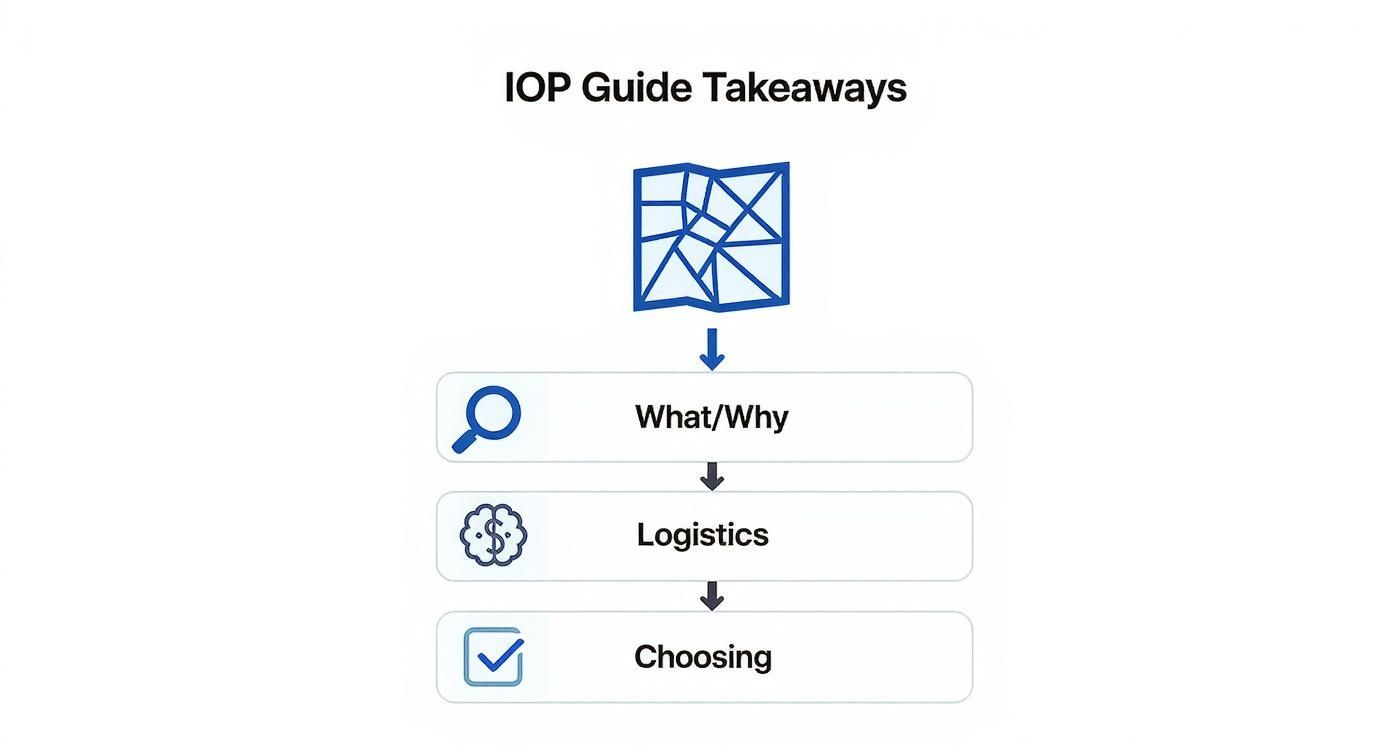
As you can see, a successful journey starts with understanding the fundamentals, moves into the therapies and logistics, and finishes with making a well-informed choice.
Key Features of an IOP
To give you a clearer picture, let's break down the core components that define a high-quality intensive outpatient program.
1. A Structured Yet Flexible Schedule
Most IOPs in Massachusetts involve a time commitment of 9 to 20 hours per week, usually spread across three to five days. Sessions are typically held in three-hour blocks and are filled with a mix of group therapy, one-on-one counseling, and skill-building workshops. To make treatment accessible, many centers on the South Shore and beyond offer both daytime and evening program options.
This blend of structure and flexibility is the real magic of the IOP model. It gives you a high level of clinical care without forcing you to press pause on your entire life.
2. Group Therapy Is the Cornerstone
While individual counseling is a critical piece of the puzzle, group therapy forms the heart of most IOPs. In these sessions, you connect with others who truly get what you’re going through, which instantly creates a powerful sense of community and chips away at feelings of isolation.
Led by a licensed therapist, these groups are where the real work happens. You’ll dive into essential topics like:
- Building solid relapse prevention strategies
- Learning healthy ways to cope with triggers and stress
- Practicing better communication with loved ones
- Developing skills for emotional regulation and distress tolerance
3. Real-World Application
Unlike an inpatient program that temporarily removes you from your daily environment, an IOP is all about learning and applying new skills in real time. After a therapy session, you go right back to your life—to your family, your job, and your community—and immediately get to practice what you just learned. This constant feedback loop is what helps those new, healthy behaviors stick for the long haul.
4. A Key Step in the Continuum of Care
An IOP isn’t meant to be an island. It’s a vital step on a much larger journey of care. For many people, it’s a “step-down” after finishing a more intense program like partial hospitalization (PHP) or residential treatment. For others, it’s a “step-up” when standard weekly therapy just isn’t enough.
A good program will always be looking ahead, helping you create a plan to smoothly transition to the next appropriate level of support, whether that’s ongoing individual therapy or alumni support groups.
A Look at Different Levels of Care
It can be tough to figure out which level of care is the right fit. This table breaks down the main options to give you a clearer understanding of how they differ.
Comparing Levels of Addiction and Mental Health Care
| Level of Care | Living Arrangement | Weekly Time Commitment | Best Suited For |
|---|---|---|---|
| Inpatient/Residential | Live at the facility 24/7 | 24/7 supervision and therapy | Individuals with severe addiction, significant medical needs, or an unstable home environment. |
| Partial Hospitalization (PHP) | Live at home, attend treatment during the day | 20+ hours (often 5-6 hours/day, 5 days/week) | A step-down from inpatient or for those needing daily structure without 24/7 supervision. |
| Intensive Outpatient (IOP) | Live at home, attend scheduled sessions | 9-20 hours (typically 3 hours/day, 3-5 days/week) | Those who are medically stable, have a supportive home life, and need more than weekly therapy. |
| Standard Outpatient | Live at home, attend scheduled sessions | 1-3 hours | Individuals with a strong recovery foundation or as a long-term maintenance/aftercare plan. |
This comparison highlights how an IOP fills a crucial gap, offering a significant level of support while still allowing for independence and real-world integration.
Evidence-Based Therapies Offered in Massachusetts IOPs
An intensive outpatient program in Massachusetts isn't just a place to talk about your problems. It’s a structured, supportive setting where you roll up your sleeves and learn practical, science-backed skills to take back control of your life. The entire approach is built on evidence-based therapies—methods that have been put through the wringer, rigorously studied, and proven to actually work.
Think of it like building a house. You wouldn't just throw some materials together and hope for the best. You'd use a solid blueprint and proven construction techniques. Quality IOPs do the same, using trusted therapeutic blueprints to help you build a durable foundation for your recovery. These aren't just abstract ideas; they're hands-on tools designed to help you connect the dots between your thoughts, feelings, and actions. That's where real power lies—the ability to make conscious, healthier choices.
Let's break down some of the core therapies you’ll find in the best programs across the state.
Cognitive Behavioral Therapy (CBT)
Cognitive Behavioral Therapy (CBT) is a true workhorse in modern addiction and mental health treatment. It’s grounded in a simple but profound idea: it's not the events in our lives that dictate how we feel, but the thoughts we have about those events. CBT teaches you how to become a detective of your own mind. You learn to spot, challenge, and reframe the automatic negative thoughts that often fuel substance use and poor mental health.
For instance, a thought like, "I've failed again, I'll never get this right," can quickly spiral into hopelessness and trigger a powerful craving. CBT gives you the tools to stop that thought in its tracks, question if it's really 100% true, and rephrase it: "This is a setback, and it's tough, but I can handle it and learn from it." That small shift is a game-changer. It breaks the cycle before it even starts. If you want to dig deeper, you can learn more about how Cognitive Behavioral Therapy works and see how it applies directly to recovery.
Dialectical Behavior Therapy (DBT)
Dialectical Behavior Therapy (DBT) was first designed for people struggling with intense, overwhelming emotions, and it’s become an incredibly valuable tool in recovery. You can think of DBT as an emotional first-aid kit. It gives you concrete, practical skills to manage painful feelings without turning to self-destructive behaviors.
DBT is organized around four essential skill sets:
- Mindfulness: How to stay grounded and present in the moment, without judgment.
- Distress Tolerance: What to do to get through a crisis without making things worse.
- Emotion Regulation: How to understand your emotions and turn down the volume when they get too loud.
- Interpersonal Effectiveness: How to ask for what you need and set boundaries in a way that protects your relationships.
These skills are invaluable, especially in the rocky terrain of early recovery where emotional turmoil can be a huge trigger. Mastering these techniques in a Massachusetts IOP helps you build genuine resilience.
Motivational Interviewing (MI)
Let's be honest: no one likes being told what to do, especially when it comes to making a massive life change. That's the beauty of Motivational Interviewing (MI). It flips the script. Instead of a therapist pushing you to change, MI is a collaborative conversation where the therapist helps you find your own reasons and motivation to change. It's about guiding, not directing.
A therapist using MI won't lecture you. They'll ask thoughtful, open-ended questions that help you explore your own mixed feelings about recovery. They might ask, "What are the good things you get from using?" and follow up with, "Now, what are some of the downsides?" This non-judgmental process helps you untangle that internal conflict and strengthen your commitment to your own goals. It makes change feel like your decision, not an order.
"Motivational Interviewing doesn't force change; it empowers it. The goal is to help individuals discover their own reasons for building a healthier life, which is a far more powerful and lasting driver than any external pressure."
Medication-Assisted Treatment (MAT)
For many people, especially those recovering from opioid or alcohol addiction, therapy alone can feel like an uphill battle against overwhelming physical cravings. Medication-Assisted Treatment (MAT) is a comprehensive approach that combines FDA-approved medications with counseling and therapy to treat the whole person—mind and body.
These medications aren't a substitute for one drug with another. They work on a neurological level to stabilize brain chemistry, block the euphoric effects of substances, and reduce the physical cravings that can make early recovery so difficult. In a licensed intensive outpatient program in Massachusetts, MAT is prescribed and managed by medical professionals as one part of your integrated treatment plan. This approach is widely considered the gold standard of care for opioid use disorder, and the data shows it dramatically improves a person's chances of long-term success.
The Dual Diagnosis Approach for Co-Occurring Disorders
Real, lasting recovery is almost never about solving just one problem. More often than not, a struggle with substance use is tangled up with mental health challenges like anxiety, depression, or trauma. When you have both at the same time, it’s called a co-occurring disorder, or a dual diagnosis.
Trying to treat the substance use without addressing the underlying mental health issue is like trying to fix a leaky boat by only bailing out water while completely ignoring the hole in the hull. You can bail forever, but you'll never get dry. To actually stay afloat, you have to patch the hole and clear the water.
That’s why a unified, integrated approach is now the standard for quality care. A top-tier intensive outpatient program in Massachusetts won't treat your addiction and mental health in separate boxes. Instead, clinicians bring psychiatric services and addiction counseling together into a single, cohesive treatment plan. The goal is to heal the whole person, not just put a bandage on the symptoms.
Why Integrated Treatment is So Important
Years ago, the model was to treat these issues separately, and frankly, it just didn't work very well. When addiction and mental health are handled in isolation, they often create a vicious feedback loop. For example, someone might drink to quiet their social anxiety, but over time, the alcohol actually makes the anxiety worse, which leads to more drinking.
An integrated dual diagnosis plan is designed to break that cycle.
- It Provides Unified Care: Your psychiatrist, your therapist, and your addiction counselor are all on the same team, working from the same game plan. This ensures your care is consistent and collaborative.
- It Addresses the Root Causes: This approach helps you finally see the connections—how your mental health symptoms might trigger substance use and vice versa—so you can build healthier ways to cope.
- It Dramatically Improves Outcomes: Study after study shows that people who get integrated treatment have a much, much higher chance of not only getting sober but staying that way for the long haul.
By treating both conditions at the same time, in the same place, you build a much stronger and more resilient foundation for your recovery. It’s about creating a real strategy for wellness, not just a temporary fix.
Dual Diagnosis Care in Massachusetts
The good news is that Massachusetts is a state that truly understands the need for this kind of integrated care. Out of 398 substance use treatment centers in the state, 81 are dedicated intensive outpatient programs.
Even more telling, 63 of those IOPs in Massachusetts specifically treat co-occurring mental health conditions like depression, anxiety, bipolar disorder, and PTSD. This shows a powerful commitment from providers across the state to address this complex issue head-on.
This means you can find programs built from the ground up to handle the real complexities of your situation. A quality dual diagnosis IOP will combine proven therapies like CBT and DBT with psychiatric care and medication management. This gets your mental and physical health stabilized, which allows you to fully dive into the therapeutic work. To see how this all comes together, you can learn more about how dual diagnosis treatment works and why it's so effective.
What to Expect in a Dual Diagnosis IOP
When you join an IOP that specializes in co-occurring disorders, your experience will be carefully structured to address both sides of the coin. Here's what that typically looks like:
- Comprehensive Assessment: It all starts with a deep-dive evaluation to get an accurate picture of both the substance use disorder and any underlying mental health conditions. No guesswork.
- Personalized Treatment Plan: Based on that assessment, clinicians will build a plan just for you. It will map out your individual therapy, specialized group sessions, and psychiatric appointments.
- Medication Management: If it makes sense for you, the medical team will oversee medications for mental health symptoms and may incorporate Medication-Assisted Treatment (MAT) to help manage cravings.
- Integrated Skill-Building: You’ll learn practical coping strategies that work for both conditions. Think learning how to manage a panic attack without reaching for a substance, or navigating a depressive episode in a healthy, proactive way.
This integrated model gives you the support and tools you need to finally untangle that knot of co-occurring disorders, clearing the way for a more stable and fulfilling life in recovery.
Navigating Insurance and Costs for Massachusetts IOPs
Figuring out the financial side of treatment can feel overwhelming, but it's a hurdle you can absolutely clear. Think of it as the first step toward making recovery a reality. In Massachusetts, there are plenty of ways to manage the costs of an intensive outpatient program, and once you understand your options, you can get back to focusing on what really matters—getting better.
Let's walk through the four most important things you need to know to handle the financial side of getting help for yourself or a loved one.
1. First, Get to Know Your Insurance Policy
Before you do anything else, you’ve got to get a handle on your insurance plan. The language they use can feel like a foreign dialect, but once you know a few key terms, you'll be in a much better position to talk with both your insurance company and the treatment centers you're considering.
- Deductible: This is the amount you have to pay out of your own pocket before your insurance company starts chipping in.
- Copayment (Copay): This is a flat fee you pay for a specific service, like a daily or per-session charge for IOP, once you've hit your deductible.
- Coinsurance: Instead of a flat fee, this is a percentage of the cost you're responsible for after your deductible is met.
- Out-of-Pocket Maximum: This is your financial safety net. It’s the absolute most you'll have to pay for covered services in a year. Once you hit this number, your insurance pays 100% of the rest.
2. Why Verifying Your Benefits is a Must-Do Step
Never just assume you know what your plan covers—it's a recipe for surprise bills later. The easiest and most reliable way to get answers is to let a treatment center's admissions team do the work for you. They talk to insurance companies all day long and can quickly figure out exactly what your plan covers for an intensive outpatient program in Massachusetts.
If you'd rather call your insurance provider yourself, just have your card handy and be ready with a few pointed questions:
- Does my policy cover intensive outpatient programs for both substance use and mental health?
- Is [Name of Treatment Center] considered an in-network provider?
- What is my remaining deductible, and what will my copay or coinsurance be for IOP services?
- Do I need to get pre-authorization before I can start treatment?
Getting this sorted out upfront saves a ton of financial stress down the road. Most good treatment centers make this easy. For instance, you can often verify your insurance coverage for IOP services online in a matter of minutes.
3. What if I Don't Have Insurance? Exploring Other Options
If you’re uninsured or your plan doesn't offer great coverage, don't give up. Massachusetts has a strong support system in place to make sure residents can get the help they need.
MassHealth, which is the state’s Medicaid program, provides excellent behavioral health benefits. For those who qualify, it frequently covers the entire cost of IOP treatment. Beyond that, many treatment centers are genuinely committed to helping people and offer other ways to make care affordable. You can often find options like:
- Sliding Scale Fees: Your treatment cost is adjusted based on your income.
- Payment Plans: The facility works with you to break down your portion of the cost into manageable monthly payments.
4. Getting a Handle on the Average Costs
It helps to know what to expect. There's a huge need for outpatient care in Massachusetts—a staggering 62,250 people enroll in this level of care every year. That high demand means there's also significant public funding. Outpatient services in the state receive about $106 million annually, which is 4.59% of all public spending on this type of care in the entire country.
For an individual, the average cost for an outpatient rehab program in Massachusetts is around $1,703. Of course, this number can change based on your specific insurance plan and how long you're in the program. You can dig deeper into these numbers in this detailed report on rehab expenses.
Don't let that initial number scare you off. Once you verify your insurance and look into the state resources available, you'll often find that top-tier care is much more affordable than it first seems.
How to Choose the Right IOP in Massachusetts
Picking the right program is one of the most important decisions you'll make, and it can truly set the tone for your entire recovery journey. With so many options across the state, from Boston to the South Shore, it's easy to feel overwhelmed. The goal here isn't just to find a place with great clinical care—it's about finding a program that actually fits you, your personality, and your life.

As you start looking, keep these four key areas in mind to help you cut through the noise and find the best path forward.
1. Check for Licensing and Accreditation
First things first, you need to verify the program’s credentials. This is a non-negotiable step. Make sure any facility you consider is licensed by the Massachusetts Department of Public Health (DPH). This is your baseline guarantee that the program meets the state's required standards for safety, staff qualifications, and quality of care.
Think of accreditations from groups like The Joint Commission or CARF as an extra seal of approval. It shows the program is going above and beyond, committing to the highest industry standards and best practices.
2. Evaluate the Treatment Philosophy and Staff
Every program has its own vibe and approach. Some might be heavily based on 12-Step principles, which works well for many, while others might focus more on mindfulness, holistic therapies, or other evidence-based models. Don't be shy—ask them to explain their core philosophy and see if it resonates with you.
Just as important are the people who will be guiding your recovery. Who’s on the team? Look for licensed therapists (like LICSWs or LMHCs), certified addiction counselors (LADCs), and other medical professionals. A compassionate, experienced staff is the true engine of any effective intensive outpatient program in Massachusetts.
3. Confirm They Treat the Whole Person
If you're dealing with a mental health condition like anxiety, depression, or PTSD alongside a substance use disorder, finding a program with a solid dual diagnosis approach is crucial. You need a team that understands how these conditions intertwine.
Ask them directly: "How do you integrate mental health care into your addiction treatment?" A top-tier program will have psychiatrists or psychiatric nurse practitioners on staff to help with medication and offer integrated therapy groups that tackle both issues head-on.
The need for this kind of comprehensive, non-emergency care is undeniable. Data from the Massachusetts Health Policy Commission's behavioral health dashboard shows that while behavioral health-related emergency department visits in Massachusetts fell by 16.8% between 2021 and 2023, a staggering 31.2% of those visits in 2023 still ended in stays longer than 24 hours. This really highlights the critical role IOPs play in getting people effective help before they hit a crisis point.
4. Consider Logistics and Environment
Don't forget the practical side of things. Can you realistically get to the facility in Quincy, Worcester, or Plymouth three to five times a week? Do they offer a schedule—morning or evening—that works with your job, school, or family life? These details really matter.
Finally, trust your gut feeling. If you can, schedule a tour or have a long chat with an admissions coordinator. The right place should feel safe, professional, and welcoming. You need to feel comfortable there to do the hard work of recovery.
Key Questions to Ask an Admissions Coordinator
- What does a typical day or session in your IOP look like?
- What is the client-to-therapist ratio in group sessions?
- How is family involved in the treatment process?
- What does your aftercare planning process involve?

Frequently Asked Questions About Massachusetts IOPs
How do I know if an IOP is the right level of care for me?
The best way to know for sure is through a clinical assessment, which reputable treatment centers offer for free. An IOP is an excellent fit if you need more support than weekly therapy provides but don't require 24/7 supervision because you have a stable and safe home life. It's an ideal step-down from residential care or a step-up for someone who needs to address a growing substance use issue while still managing daily responsibilities.
Can I continue to work or go to school during an IOP?
Yes, absolutely. This is one of the biggest advantages of an intensive outpatient program in Massachusetts. Most programs are designed for working adults and students, offering flexible morning or evening schedules. This structure allows you to immediately apply the coping skills you learn in therapy to real-world situations at work, school, or home, reinforcing your recovery.
How long does an IOP typically last?
The average length of an IOP is between 8 and 12 weeks. However, the exact duration is personalized to your individual progress and clinical needs. A good program will tailor the treatment timeline to ensure you meet your recovery goals, rather than sticking to a rigid, one-size-fits-all schedule.
Are telehealth IOP options available in Massachusetts?
Definitely. Virtual or telehealth IOPs have become a vital part of addiction treatment in Massachusetts, making high-quality care more accessible than ever. These programs use secure video conferencing for therapy sessions, which is a perfect solution if you face transportation challenges, have family obligations, or live in a more remote part of the state.
