
When someone asks, "How many days does it take to break an addiction?" what they're really asking for is a finish line. A point on the calendar they can circle and say, "I'll be free then." The hard truth, and the more helpful one, is that there isn't one simple number. The journey is deeply personal, with initial withdrawal lasting days to weeks, while the deeper work of rewiring the brain and building a new life takes much longer. For those in Massachusetts, understanding the local resources available is the first step toward lasting change.
The Uncomfortable Truth About Breaking an Addiction
It helps to think of recovery not as a sprint but as a journey with distinct stages. It’s a lot like training for a marathon. The first few miles (the withdrawal phase) are often the most physically grueling. They test your immediate willpower and push your body to its limits.
But the true challenge of a marathon isn't just the first few miles; it's the long haul. It's the mental and emotional endurance required to keep going when you're tired, to pace yourself, and to understand the course ahead. Recovery is the same.
To give you a clearer map for the road ahead, we've boiled this complex process down to four essential truths that will guide you from here.
Key Takeaways for Your Recovery Journey
- Timelines Are Deeply Personal: The substance you used, how long you used it, and your own unique body chemistry all come together to create a timeline that is yours alone. No two paths are ever identical, which is why a one-size-fits-all approach just doesn't work.
- Withdrawal Is Just the First Step: Getting through the initial physical symptoms is a massive achievement and a critical first hurdle. But it's the starting line, not the finish. Real, lasting recovery happens when you start addressing the why behind the addiction.
- Professional Support Is a Game-Changer: Trying to navigate this alone is incredibly difficult. Working with experts through treatment programs in Massachusetts gives you the tools, structure, and guidance that dramatically improve your chances of long-term success.
- Recovery Is a Lifelong Practice: True freedom isn't just about stopping something; it's about starting something new. It’s the daily work of building new habits, better coping skills, and creating a life you are genuinely excited to live sober.
The goal of recovery isn't just to stop using a substance—it's to build a life so fulfilling that the thought of returning to addiction loses its power.
Grasping these ideas from the start helps set a realistic foundation for the path ahead. The initial physical pain is temporary, but the skills, mindset, and support system you build during treatment are what will carry you for the rest of your life. It’s a shift from counting the days to making the days count.
Frequently Asked Questions
Is there a magic number of days for recovery?
No, there really isn’t a universal timeline. Recovery is a highly individual process. While the initial detox phase often falls within a more predictable window (say, 5-14 days), the overall journey of recovery is a much longer, ongoing commitment.
Why can't I just quit on my own?
Some people do, but it’s the exception, not the rule. Professional support is designed to help you uncover and heal the reasons you started using in the first place. A good program offers therapy, medical supervision, and a community of peers—powerful tools proven to help people build a strong foundation for sobriety.
Does my location in Massachusetts matter for treatment?
Absolutely. Finding quality, local support is crucial. Accessible care, like the outpatient programs at South Shore Recovery Center, allows you to get the help you need while staying connected to your job, your family, and your community. It’s about integrating recovery into your real life.
Navigating the Two Key Stages of Recovery
When people ask, "how many days does it take to break an addiction?" they're often thinking of it as a single event. But in reality, recovery unfolds in two very distinct stages. Knowing the difference is a game-changer because it helps you set realistic expectations. It reframes the journey from a frantic sprint to a manageable, long-term process of healing.
Think of it like recovering from a serious injury. The first part is the emergency room visit—it’s intense, focused on just getting you stable, and often painful. The second part is the long, steady work of physical therapy that comes afterward. Both are critical, but they require a completely different approach.
Stage 1: The Acute Withdrawal Phase
This is the "emergency room" stage. Acute withdrawal is your body's immediate, and often intense, reaction when a substance it depends on is suddenly gone. This phase is almost entirely physical, a battle your system wages to find a new equilibrium without the drug or alcohol it learned to rely on.
The symptoms can feel overwhelming and may include:
- Intense, all-consuming cravings
- Nausea, vomiting, or diarrhea
- Shakes, tremors, and deep muscle aches
- Hot and cold flashes, with profuse sweating or chills
- Insomnia and a sense of complete exhaustion
This is usually the shortest part of the journey, but it can easily be the most difficult. For most substances, this period lasts anywhere from a few days to a couple of weeks. Making it through is a huge first step, but it's important to remember it’s just that—the first step.
Stage 2: The Post-Acute Withdrawal Phase
After the intense physical storm of acute withdrawal passes, you enter the "physical therapy" stage of recovery. This is officially known as Post-Acute Withdrawal Syndrome (PAWS). PAWS isn't about feeling physically sick anymore; it's about the brain's slow, gradual process of healing and rewiring its own chemistry.
This next phase is much longer and is defined by psychological and emotional challenges that can pop up unexpectedly for months, sometimes for more than a year. The symptoms tend to come and go in waves, which is why you might have a great week followed by an incredibly difficult one.
PAWS is a completely normal part of the brain's healing journey. Hitting these late-stage bumps in the road isn't a sign you're failing—it's a signal that your mind is still hard at work repairing itself.
Common PAWS symptoms include things like mood swings, lingering anxiety, low energy, irritability, and trouble with focus or sleep. Getting through this phase requires a different set of tools entirely, ones focused on mental health, building coping skills, and having consistent support. This is exactly why structured treatment programs are so vital for long-term success. You can explore the different levels of treatment that are designed to support you through every part of this journey.
Breaking an addiction isn't a quick fix. It takes months of dedicated work and support to achieve lasting sobriety. The good news? It works. Data shows that roughly 89% of people who complete alcohol rehab programs are still sober one month later, with that number holding strong at over 70% nine months out. This shows just how critical sustained effort is. You can find more details about rehab success rates on legacytreatment.org.
How Long Does It Take to Break an Addiction?
When you’re facing addiction, one of the first questions that comes to mind is often, "How long is this going to take?" It's a natural and important question. Having a rough timeline can give you a sense of what to expect, making the whole process feel a little less overwhelming.
Of course, everyone's journey is unique. Think of these timelines less as rigid deadlines and more as a helpful map for the first leg of your recovery. They help answer that immediate question about how many days it takes to get through the initial physical fight, which then sets the stage for the deeper, long-term work of healing your mind.
Recovery unfolds in distinct phases. You have the initial, intense storm of acute withdrawal, followed by the longer, more gradual process of healing the brain.
This visual timeline breaks down the two main stages you’ll go through: the shorter, more intense Acute Withdrawal phase and the longer, more subtle phase known as Post-Acute Withdrawal Syndrome (PAWS).
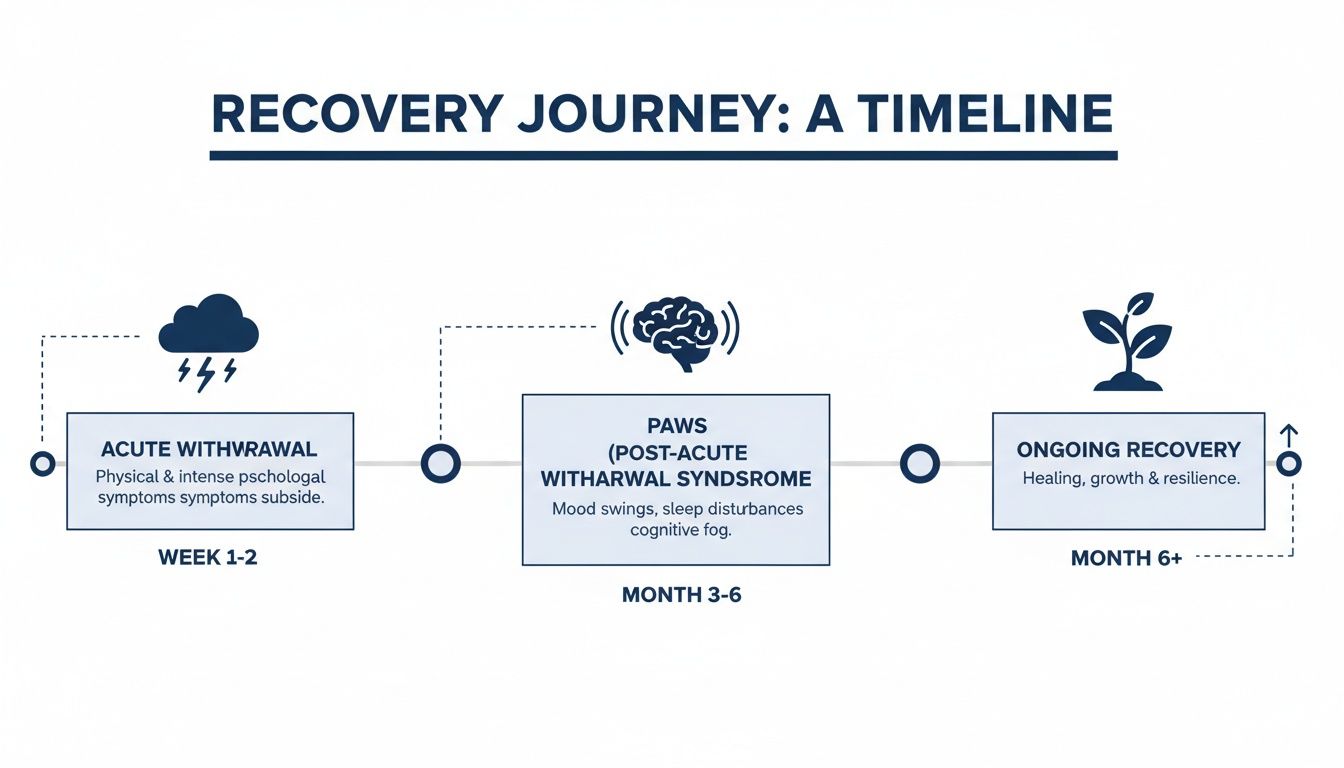
As you can see, the toughest physical symptoms tend to clear up relatively quickly. The real marathon is the psychological healing that follows, which is why having ongoing support is so critical.
Estimated Addiction Recovery Timelines by Substance
To give you a clearer picture, we've broken down the typical timelines for the initial phases of recovery for some of the most common substances. Keep in mind that these are just averages—your personal experience will depend on many different factors.
| Substance | Acute Withdrawal Timeline | Common Post-Acute Withdrawal (PAWS) Duration |
|---|---|---|
| Alcohol | 6-24 hours to start, peaks in 24-72 hours, lasts up to a week. | Can last several months to over a year. |
| Opioids (Short-Acting) | Starts in 8-24 hours, lasts 4-10 days. | Often lasts for several months. |
| Opioids (Long-Acting) | Starts in 2-4 days, can last several weeks. | Can last for a year or more. |
| Stimulants | Peaks within the first week, can last several weeks. | Can persist for several months. |
| Nicotine | Physical detox takes 3-4 days; cravings last weeks. | Psychological symptoms may linger for a month or more. |
These timelines show that while the acute phase is relatively short, the journey doesn't end there. The brain and body need much more time to heal, which is why continued care after detox is so essential for long-term success.
A Closer Look at Common Substances
Alcohol and Opioids
If you're struggling with alcohol, the acute withdrawal usually kicks in within 6-24 hours after your last drink. The symptoms tend to be at their worst within 24-72 hours and can hang on for about a week. You can get a more detailed look at the specific alcohol withdrawal symptoms and treatment to know exactly what to prepare for.
Opioids follow a similar, yet distinct, path. For short-acting drugs like heroin or fentanyl, you’ll likely feel symptoms start within 8-24 hours, with the acute phase lasting anywhere from 4-10 days. For longer-acting opioids like methadone, withdrawal can take 2-4 days to even begin and may last for several weeks.
It's incredibly important to remember that medically supervised detox is often necessary, especially for alcohol and opioids. This isn't just about comfort; it's about safety. Professional oversight helps manage severe symptoms and makes this initial phase of recovery much safer and more bearable.
Stimulants and Nicotine
Stimulants like cocaine and meth have a different withdrawal profile. The physical symptoms aren't as severe as with alcohol or opioids, but the psychological crash can be brutal. This acute phase, marked by deep fatigue, depression, and agitation, usually peaks in the first week and can linger for several more.
Even though it’s legal, nicotine is powerfully addictive. The initial physical detox is quick—about 3-4 days as the chemical leaves your system. The real battle is with the cravings and psychological symptoms like irritability and anxiety, which can stick around for weeks. For most people, it takes a solid month or more of real effort to truly break the habit.
You Are Not Alone in This
The struggle to break an addiction is a global one. An estimated 35 million people worldwide suffer from drug use disorders, but shockingly, only one in seven ever gets the treatment they need. Here in the U.S., of the 41.5 million adults who need treatment, only about 24.2% actually receive it.
But here’s the most important statistic of all: Despite those daunting numbers, there is so much hope. Surveys show that nearly 75% of people who have ever had a substance use issue eventually find their way to recovery.
That powerful number shows that while the road is long and difficult, lasting freedom from addiction isn't just a possibility—it's a reality for millions.
Understanding these timelines is a great first step. It helps demystify the start of the process, letting you prepare yourself mentally and physically for the journey ahead, knowing that you are walking a path that millions have successfully navigated before you.
What Shapes Your Personal Recovery Timeline
Ever wonder why one person's path through recovery looks so different from another's? It’s not about willpower or being "stronger." The truth is, healing from addiction is a deeply personal process, and there’s no universal blueprint for how it unfolds.
Understanding the variables that influence your own timeline is the first step toward playing an active role in your healing. This isn't about just marking days off a calendar; it's about creating the right environment for lasting change to take hold. Several key elements come together to define the length and intensity of your journey.
Four Key Factors That Influence Your Recovery
Let's break down the four most significant factors that shape what your recovery will look like and how long it might take.
-
The Substance and Your History With It: The type of substance you used is a huge piece of the puzzle. As we've seen, getting through alcohol withdrawal is a very different experience than detoxing from opioids or stimulants. Just as critical is your history—someone who used heavily for a decade is going to have a different road ahead than someone whose use was shorter-term.
-
Your Unique Biology and Health: Your body's physical and genetic makeup plays a massive role here. Things like your metabolism, your overall health, and even genetic predispositions can all impact how your body handles withdrawal and how quickly your brain chemistry can start to find its balance again.
-
Co-Occurring Mental Health Conditions: Addiction rarely shows up alone. It often travels with companions like depression, anxiety, or past trauma. When these conditions are part of the picture, they can make withdrawal feel more intense and throw extra hurdles in your path to recovery.
Healing isn't just about stopping substance use; it's about healing the whole person. Addressing both addiction and mental health at the same time is essential for building a recovery that lasts.
This is exactly why a comprehensive approach is non-negotiable. You can learn more about how facilities in Massachusetts provide integrated care for co-occurring disorders, which is the cornerstone of effective, sustainable healing.
-
Your Treatment and Support System: This might just be the most powerful factor you have control over. Having a strong, positive support system—family, friends, and peers who get it—gives you the encouragement and accountability you need to get through the tough spots. The professional treatment you choose is just as vital. A structured program provides proven therapies and medical support that can genuinely shorten the struggle and build a solid foundation for your new life.
Why a Personalized Plan Matters
These factors make it clear why a one-size-fits-all answer to "how many days does it take to break an addiction?" just doesn't exist. Your journey is a unique blend of your history, biology, mental health, and the support network you build.
This is precisely why effective treatment programs, especially local Massachusetts options, are built around creating personalized care plans. They take the time to understand your specific situation and tailor an approach that gives you the best possible shot at success.
Frequently Asked Questions
Does my age affect my recovery timeline?
Yes, age can definitely be a factor. Younger people often have more neuroplasticity, which means their brains might bounce back a bit faster. On the other hand, older adults often bring a wealth of life experience and powerful motivation to their recovery, which are incredible assets.
What if I have been to treatment before?
Relapse is a common part of the recovery process for many people—it is not a sign of failure. If you've been to treatment before, you're coming back with valuable experience and more self-awareness. That prior knowledge can often help you engage more effectively this time around.
How important is my home environment?
Your living situation is critically important. A stable, supportive, and substance-free home can make a world of difference. A stressful or triggering environment, however, can create major challenges. That’s why family therapy and creating a safe home plan are often key parts of a good treatment program.
How Massachusetts Treatment Programs Guide Recovery
Trying to find your way to sobriety on your own is an uphill battle. That's where professional guidance comes in. Here in Massachusetts, structured treatment programs are built to support you through every single stage of recovery, helping you answer the bigger questions that go way beyond "how many days does it take to break an addiction?" Think of these programs as providing the framework, the tools, and the community you need to turn the desire for change into a reality that lasts.
Below, we'll walk through the different levels of outpatient care, from the immersive support you’d find in a Day Treatment Program to the more flexible structure of an Intensive Outpatient Program. Understanding how they actually work can make taking that first step toward getting help feel much more clear and manageable.
Key Takeaways on Treatment Programs
- Structure is Everything: Outpatient programs give you a consistent, therapeutic environment. This builds routine and accountability, two things that are absolutely essential in the early days of recovery.
- Care Levels Match Your Needs: A program like a PHP offers intense support for that initial, vulnerable phase. As you get stronger, an IOP helps you practice sober living skills while you start getting back to your daily life.
- Local Care is Real-Life Care: Getting treatment right here on the South Shore means you can heal within your own community, keeping your connections to family and work strong.
- Insurance Opens Doors: Good treatment centers will help you figure out your insurance benefits, taking the financial stress out of getting high-quality, evidence-based care.
A Look Inside Massachusetts Outpatient Programs
Outpatient treatment isn't a one-size-fits-all deal. It's designed as a "step-down" system, which means you can move through different levels of care that match the progress you're making.
Day Treatment Program (PHP)
Think of a Day Treatment Program, also known as a Partial Hospitalization Program (PHP), as the most intensive kind of outpatient care you can get. It’s perfect for someone who needs a lot of support but is stable enough to live at home. Typically, you'll be in treatment for 5-6 hours a day, 5 days a week.
This immersive schedule creates a powerful mix of individual therapy, group sessions, and workshops where you build real-world skills. It’s all about getting you stable in early recovery and building a rock-solid foundation for what comes next.
Intensive Outpatient Program (IOP)
The next step down is an Intensive Outpatient Program (IOP). This offers a more flexible schedule, usually requiring 3 hours of treatment, 3-5 days per week.
This structure is designed to help you practice the relapse prevention skills you’ve learned while you start navigating the everyday challenges of work, family, and your social life. An IOP helps you apply sober coping skills in a real-world context.
The whole point of these programs is to give you the right amount of support at exactly the right time. It's about building your resilience and confidence step-by-step, so you feel fully prepared to maintain your sobriety long after you've completed treatment.
Finding Accessible Care on the South Shore
Just making the decision to get help is a massive step. The process of actually finding that help shouldn't be another roadblock. For anyone living in the greater Massachusetts area, having local options makes a world of difference.
Reputable centers on the South Shore make this easier by helping you navigate your insurance coverage. An admissions coordinator can verify your benefits and explain exactly what your plan covers, so you can get the care you need without the added financial stress. This kind of local, practical support makes starting your recovery journey feel straightforward and a lot less intimidating.
Frequently Asked Questions
What's the difference between PHP and IOP?
The biggest difference is the time commitment. A PHP is much more immersive—think of it as a full-time job focused on your recovery (25-30 hours per week). An IOP is less intensive (9-15 hours per week), designed to help you balance treatment with your daily responsibilities.
How do I know which program is right for me?
You don’t have to figure that out alone. A clinical assessment with a treatment professional is the first step. They’ll recommend the right level of care for you based on your substance use history, mental health needs, and home environment.
Will my insurance cover these programs?
Most major insurance plans, including those widely used in Massachusetts, cover outpatient addiction treatment. A treatment center’s admissions team can do a free, confidential verification of your benefits to confirm your exact coverage.
Building a Sober Life You Don't Want to Escape
At a certain point, recovery stops being about just not using. It becomes about building a life so real, so engaging, that going back to your old ways just doesn't make sense anymore.
This is the long game. It's where you shift your focus from simply surviving withdrawal to actively creating a future you have no desire to escape from. It’s the part where you rediscover what truly makes you tick—your purpose, your passions, and your connections with people.
This isn’t just about willpower; it's about learning a new set of skills for living. You'll learn to spot your personal triggers from a mile away and build an arsenal of healthy ways to deal with them. You’ll also start the slow, steady work of mending relationships, finding your place in a sober community, and setting goals that actually get you excited to wake up in the morning.

Key Takeaways for Long-Term Sobriety
-
Map Your Triggers and Build New Roads: Think of early sobriety like navigating a familiar town where all the old roads lead to the same bad place. You have to learn to recognize the people, places, and even feelings that used to be automatic triggers. Then, you start paving new roads—calling a sponsor, hitting the gym, practicing mindfulness—that lead somewhere better.
-
Surround Yourself With a Sober Crew: The people you spend time with have a huge impact on your recovery. It's crucial to find and lean on people who genuinely support your sobriety. This might look like joining a 12-step group right here in Massachusetts, reaching out to old friends who live sober, or diving into new hobbies where using isn't the main event.
-
Find Your "Why" Again with Meaningful Goals: Addiction has a way of hijacking your life and draining your sense of purpose. A powerful way to reclaim it is by setting small, realistic goals. Whether it’s going back to school, getting a certification, running a 5k, or just finishing a creative project, each small win rebuilds your confidence and gives you a positive direction.
-
Embrace Recovery as a Marathon, Not a Sprint: Here’s a hard but vital truth: most people don't get this perfect on the first try. Research shows that while about 75% of people do find long-term, stable recovery, it can take years of picking yourself up and trying again. You can learn more about the winding path to successful recovery on statnews.com.
Building a sober life is an active, creative process. It's like being an architect of your own future—designing a lifestyle based on what you value, not what a substance dictates. The goal is to create something that brings you more genuine joy than any high ever could.
Frequently Asked Questions
What if I feel bored or empty in sobriety?
This is one of the most common hurdles, and it makes perfect sense. For a long time, a substance filled your hours and gave your brain a shortcut to feeling "good." Now, you have to find new, healthy sources of joy, and that takes time. Be patient with yourself. Start exploring—try that hiking trail, sign up for that class, volunteer somewhere. You just have to find your new thing.
How do I rebuild relationships I damaged?
Trust isn't rebuilt with words; it's rebuilt with consistent action over time. It’s about making "living amends"—showing the people you care about that you’ve changed, day in and day out. Family therapy, which is often a component of treatment programs in Massachusetts, can be an incredible tool for starting these tough but necessary conversations in a safe, guided space.
Is it normal to still miss my old life sometimes?
Yes, absolutely. It's completely normal to have moments where you romanticize the past. Your brain spent years building powerful connections between using and relief or pleasure. The skill is learning to acknowledge that thought without letting it take the driver's seat. Just let it float by and remind yourself why you chose this new life and what you've gained.
Final Takeaways: Your Path Forward
The road to sobriety is full of questions, and getting clear, honest answers is one of the most important parts of moving forward. When you're trying to figure out what recovery really looks like and how long it might take, it's easy to feel overwhelmed. Let's cut through the noise and summarize the most important points to remember.
Four Key Takeaways
- Professional help is a game-changer. While going "cold turkey" might seem brave, it’s an incredibly tough road with a lower chance of long-term success. Structured support gives you proven tools to get to the root of the addiction, not just the symptoms.
- PAWS isn't just a bad week. Everyone has a bad week, and it's usually tied to a specific reason. Post-Acute Withdrawal Syndrome (PAWS) is different. The mood swings, anxiety, and low energy can show up out of nowhere and stick around for months, coming and going in waves.
- Your first step is just one phone call. Getting help in Massachusetts doesn't have to be complicated. It starts with a confidential conversation—with your doctor, a helpline, or a treatment center. That single call connects you to someone who can point you in the right direction.
- Recovery is a journey, not a destination. There’s no finish line you cross where addiction is “cured.” It's a continuous process of building new skills, leaning on a strong support system, and creating a life that makes sobriety worth fighting for.
The most courageous step you can take is the first one—asking for help. This single action opens the door to a network of support designed to guide you through every phase of recovery, from the initial challenges to lasting freedom.
Frequently Asked Questions
Can I break an addiction without professional help?
Some people do, but it makes an already difficult process so much harder. Think of it this way: you could try to fix a complex car engine with a basic wrench, but a trained mechanic with a full toolkit will get the job done right. Professional treatment provides the right tools—therapy, medical guidance, and a community of people who get it. This support system gives you accountability and strategies that address the deep-rooted psychological reasons behind the addiction, which dramatically increases your chances of success.
How do I know if I'm having a bad week or experiencing PAWS?
The real difference lies in the "why." A bad week is usually a reaction to something specific you can point to—a stressful day at work, a fight with a loved one. When that stressor fades, so does the bad mood. PAWS is trickier. The symptoms—like anxiety, fatigue, irritability, or trouble concentrating—often feel like they come out of the blue. They can linger for weeks or months and tend to show up in unpredictable waves. Keeping a simple journal of your moods can help you and your support team spot the pattern.
What is the first step to get help in Massachusetts?
It’s simpler than you might think: make one confidential phone call. You can reach out to your primary care doctor, call a local addiction helpline, or connect with the admissions team here at South Shore Recovery Center. A compassionate professional will listen without judgment, help you understand your situation, and guide you directly to the level of care that makes the most sense for you.
