

Deciding to seek help for substance use is a courageous first step, but it often comes with practical questions. One of the most common is, "How long is outpatient rehab?" Understanding the timeline helps you plan and commit to a recovery process that fits your life. This guide will break down the typical duration of programs in Massachusetts, the factors that influence your personal timeline, and what to expect on your journey.
Key Takeaways
- Typical Duration: Most outpatient rehab programs in Massachusetts last from 30 to 90 days, but this varies based on individual needs.
- Program Intensity Matters: The length depends on the level of care. A Day Treatment Program (PHP) is shorter and more intensive (4-6 weeks), while an Intensive Outpatient Program (IOP) offers more flexibility over a longer period (8-12+ weeks).
- Treatment is Personalized: Your timeline is determined by factors like your substance use history, co-occurring mental health conditions (dual diagnosis), and personal recovery goals.
- Flexibility is Key: Your treatment plan is not set in stone. It can be adjusted based on your progress, and it's common for individuals to extend their time in a program to feel more secure before stepping down to a lower level of care.
Decoding Your Outpatient Rehab Timeline
Let's break down what goes into determining that timeline. It’s not just a number picked out of a hat. The length of your program is a clinical recommendation, carefully planned based on your unique circumstances.
Think of it this way: the treatment plan is built around you. Things like the substance used, how long the struggle has been going on, and whether there are other mental health concerns (like anxiety or depression) all help shape a timeline that gives you the absolute best shot at long-term success.
Factors That Shape Your Treatment Duration
So, what determines if your program is closer to 30 days or extends beyond 90? Several key factors come into play:
- Your Personal History: Someone stepping down from a residential program might have a different timeline than a person who is starting their recovery journey fresh with outpatient care.
- The Program's Intensity: More intensive programs, like a Day Treatment Program (DTP), usually pack a lot of therapy into a shorter period, often around 30 days. Less intensive options provide steady support over a longer stretch, like 60 to 90 days or even more.
- Your Progress: Recovery isn't a straight line. Your clinical team will be with you every step of the way, checking in on your progress. If you need more time to feel secure, the plan can be adjusted. It's all about making sure you’re truly ready for the next step.
- Insurance Authorization: Your insurance carrier will authorize treatment based on what they determine is medically necessary. A good treatment center will handle this for you, advocating on your behalf to get you the full length of care you need to heal.
At the end of the day, the goal isn't just to check a box and finish a program. It's about building real-world skills and the resilience you need for a lifetime of recovery. The "right" duration is simply however long it takes to get you there.
A Snapshot of Outpatient Rehab Program Timelines
To help you see how this all fits together, here’s a quick comparison of the different levels of outpatient care. This table breaks down the length, intensity, and who each program is typically a good fit for on their recovery journey in Massachusetts.
| Program Level | Typical Duration | Weekly Time Commitment | Best Suited For |
|---|---|---|---|
| Day Treatment (DTP) | 4-6 Weeks | 5-7 days/week for 5-6 hours/day | Individuals needing intensive, structured support, often as a step-down from inpatient care. |
| Intensive Outpatient (IOP) | 8-12 Weeks (or longer) | 3-5 days/week for 3-4 hours/day | Those who require a significant level of care but need flexibility for work or school. |
| Outpatient Program (OP) | 3-6+ Months | 1-2 days/week for 1-2 hours/day | People who have a strong foundation in recovery and need ongoing support and accountability. |
This breakdown shows how outpatient care can be layered to meet you where you are. You might start in a Day Treatment Program and gradually step down to a less intensive program as you gain confidence and skills.
Exploring these different levels of care is the best way to understand what your own path might look like. At South Shore Recovery Center, our team is here to walk you through the options, from highly structured day programs to flexible evening sessions.
You can learn more about our comprehensive outpatient treatment program and how we tailor our approach to fit your life. We're committed to helping you find the right path and ensuring you have the time and tools you need to build a lasting recovery.
A Closer Look at Outpatient Care Levels
Outpatient rehab isn't a one-size-fits-all solution. It's really a spectrum of care, with different levels of intensity designed to meet you right where you are in your recovery journey. Figuring out "how long is outpatient rehab?" starts with understanding these distinct levels, because each one has its own structure, time commitment, and focus.
Think of it like physical therapy. Someone recovering from a major surgery needs a much more intensive and frequent treatment plan than someone with a mild sprain. It’s the same in addiction recovery; the level of care is matched to the clinical needs of the person.
Day Treatment or Partial Hospitalization Programs (PHP)
At the highest level of outpatient support, you'll find Day Treatment, which is also widely known as a Partial Hospitalization Program (PHP). This is a very structured option, often serving as a bridge for someone stepping down from a residential program. It can also be the right starting point for someone who needs intensive support but already has a stable and safe home environment.
A Massachusetts PHP typically means you're attending treatment five to seven days a week, for several hours each day. It’s an immersive schedule packed with individual and group therapy, workshops to build coping skills, and medical monitoring. Most people are in a PHP for about 30 to 45 days, giving them a strong, concentrated foundation for recovery.
A PHP is all about stabilization. It provides a solid, supportive container for those crucial first steps in recovery, helping you build essential skills before moving to a program with more flexibility.
Intensive Outpatient Programs (IOP)
The most common and versatile option is the Intensive Outpatient Program (IOP). An IOP hits that sweet spot between providing serious clinical support and allowing for the flexibility needed to manage daily life. It's an incredibly effective model for people here in the Boston area and across the South Shore.
Generally, an IOP involves sessions three to five days per week, with each session lasting about three to four hours. With morning and evening groups often available, you can continue with work, school, or family commitments while getting the therapy you need. The average length for an IOP is usually between eight and twelve weeks, but this can always be adjusted based on your progress and what the clinical team recommends.

Standard Outpatient Programs (OP)
Finally, we have standard Outpatient Programs (OP), which are the least intensive level. This is often the next step after completing an IOP, providing a way to stay connected to support. It can also be a good fit for individuals with less severe substance use issues who already have a strong personal support system in place.
An OP might involve just one or two therapy sessions a week for an hour or so. The goal here is long-term accountability and having a consistent space to work through the real-world challenges that come up in recovery. The timeline is very flexible—it could last for three months, six months, or even longer, acting as a vital link to maintaining lasting, independent sobriety.
To see how these programs fit together, you can learn more about the different levels of treatment at South Shore Recovery Center and understand how they create a seamless path toward wellness.
So, What Determines How Long Your Treatment Will Be?
Ever wonder why one person's outpatient rehab program might last 30 days while another person’s goes for 90 days or even longer? It’s not a random number. Think of it like a physical therapist designing a recovery plan—a minor sprain needs a very different approach than a complex fracture.
Your recovery timeline is built around you. Our clinical team looks closely at several pieces of the puzzle to create a plan that gives you the strongest possible foundation for sobriety. We want to make sure the level of care and its duration are a perfect match for where you are in your journey.
The Nature of the Substance Use
A huge part of the equation is the addiction itself. The specific substance, how long you've been using it, and the amount you were using all play a major role in shaping your treatment plan. Someone with a long history of opioid dependence, for instance, will likely need a different level of care and a longer timeline than someone who is just beginning to address a pattern of heavy drinking.
Simply put, a more severe or long-standing substance use disorder usually requires more time to help you stabilize, learn new ways to cope, and build a rock-solid plan to prevent relapse. We need to ensure the treatment goes deep enough to get at the root causes.
Do You Have a Co-Occurring Condition?
It’s incredibly common for people struggling with addiction to also be dealing with mental health challenges like anxiety, depression, PTSD, or trauma. When these dual diagnosis, or co-occurring, conditions are part of the picture, we have to treat both at the same time for recovery to stick.
Treating addiction without addressing the underlying mental health condition is like fixing a leak in a boat but ignoring a hole in the hull. True recovery requires a plan that heals the whole person, which often means a more extended and integrated treatment timeline.
Tackling both issues takes time and specialized care, often blending addiction counseling with therapies like Cognitive Behavioral Therapy (CBT). This integrated approach is absolutely essential for long-term wellness and will naturally affect how long we recommend for your program.
What Are Your Personal Goals for Recovery?
Your own goals for what you want to achieve in recovery are a big driver of your treatment plan's length. Research actually backs this up, showing that the more goals a person has for their rehabilitation, the longer their treatment tends to be. You can explore the findings on rehabilitation stays to see how comprehensive goals and treatment duration are linked.
For example, maybe your goals go beyond just stopping substance use. You might also want to rebuild trust with your family, learn new job skills, or figure out how to manage chronic pain without addictive medication. If so, your treatment plan will be designed to give you the space, time, and support needed to work toward every single one of those goals. This personalized approach is what makes recovery truly meaningful and effective.
What to Expect During Your Treatment Journey
Stepping into recovery can feel a bit like setting out on a long hike without a map. It’s natural to feel uncertain. But the path is more structured than you might think, designed to guide you from your very first day all the way to long-term wellness.
Once you understand the stages, that big question—"how long is outpatient rehab?"—starts to feel a lot less intimidating. The entire process is built to meet you exactly where you are and help you move forward, one step at a time.
Stage 1: The Initial Assessment
Your journey with us starts with a comprehensive assessment. Think of this less as a formal interview and more as a real conversation. It's our chance to get to know you—your story, the challenges you're facing, and what you hope to achieve. This first meeting is the bedrock of your entire treatment plan, ensuring we create a program that genuinely fits you.
Stage 2: The Active Treatment Phase
With a personalized plan in hand, you'll move into the active treatment phase. This is where the real work of recovery begins. It’s a dynamic mix of one-on-one therapy, group sessions that build connection, and educational workshops that give you practical tools for your new life.
Progress here isn’t just about marking days off a calendar. It's about hitting meaningful milestones.
This diagram helps visualize the key factors that shape your unique treatment timeline and how they all connect.
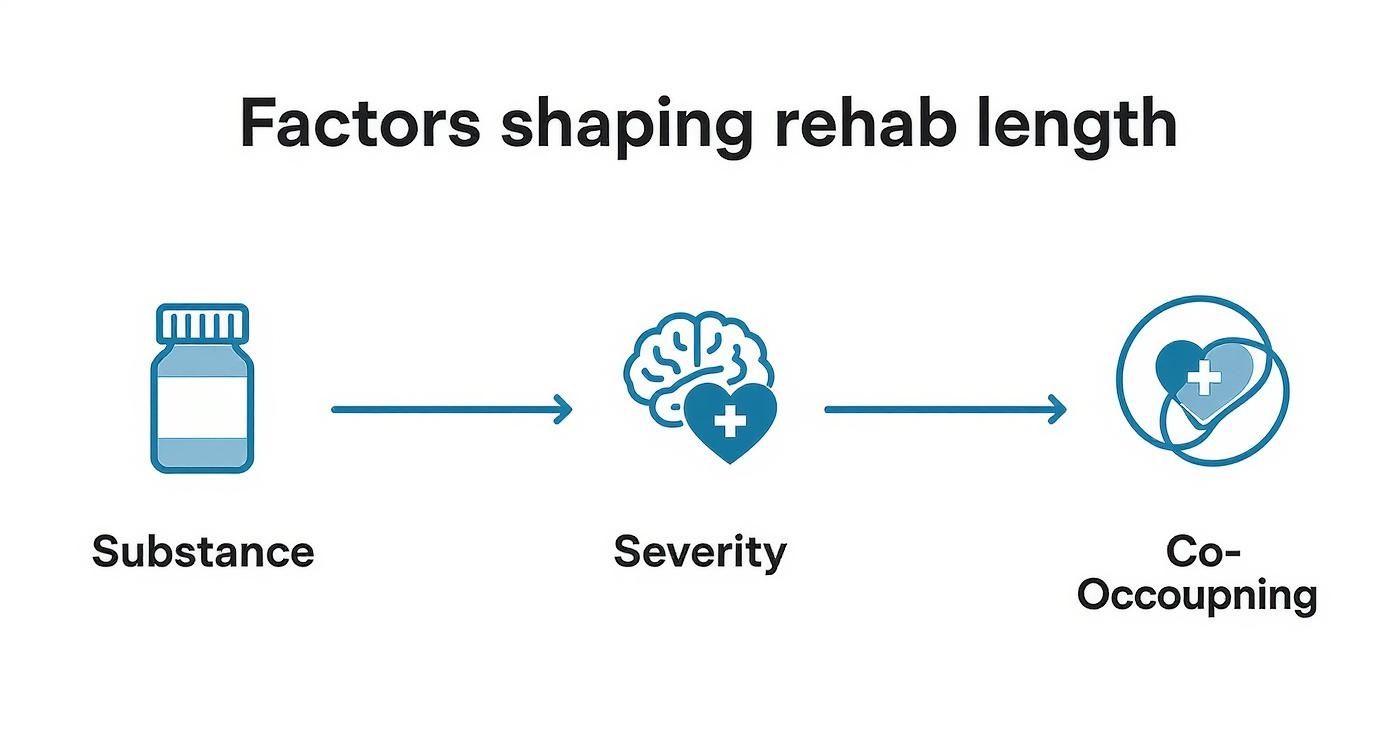
As you can see, things like the specific substance used, the severity of the addiction, and any co-occurring mental health conditions all play a role. We look at the whole picture to make sure every aspect of your well-being is addressed.
Key Milestones You Might Expect
- First 30 Days: The initial focus is on getting stable and building a solid foundation. You'll start learning to spot your triggers, develop healthier ways to cope, and build a strong sense of community with others in your group.
- First 60 Days: Now, you'll start to dig a little deeper into the root causes of addiction. This often means exploring past trauma, working through family dynamics, and learning new ways to communicate that help rebuild relationships and trust.
- First 90 Days: The goal here is to lock in your progress and prepare you for what comes next. You'll work on a detailed relapse prevention plan and start applying your new skills to everyday situations, building confidence as you go.
Stage 3: Transitioning to Aftercare
Finishing a program is a huge accomplishment, but it's not the finish line. The final stage is a smooth transition into aftercare, which is all about creating a sustainable support system for the long haul. This means getting you connected with alumni programs, helping you find local Massachusetts support groups, and setting up ongoing therapy if needed.
It's crucial to remember that everyone's recovery path looks different. To put it in perspective, consider data from other complex medical recoveries. For example, post-COVID-19 rehabilitation studies show that patients often need extended support, with a median therapy duration of 35 days. You can read more about these CDC findings and see why personalized timelines are so vital for lasting success.
Ultimately, your journey is your own. The right amount of time is whatever it takes for you to build a resilient, sober life you can be proud of.
Navigating Insurance for Your Treatment
Let’s be honest: figuring out insurance can feel like a full-time job, and it’s the last thing you need to worry about when you're focusing on recovery. But understanding how your insurance plan works is a key piece of the puzzle, as it often has a big say in how long your treatment can last.
Insurance companies have their own set of rules for what they consider "medically necessary." While your clinical team knows what you need, the insurance provider has the final say on what they'll cover. It can sound intimidating, but this is a road we’ve walked down many times before. Our admissions team here in Massachusetts is skilled at working with insurance providers. We handle the calls and the paperwork, fighting for the coverage you deserve so you can put all your energy into getting better.
Understanding the Lingo
It helps to know a few key terms so you feel more in control of the process. You'll likely hear about prior authorization and utilization review.
Think of prior authorization as the green light you need from your insurer before you start treatment. Utilization review is more like a series of checkpoints. As you progress, your insurer will regularly review your case to make sure continued care is necessary. This is where your clinical team steps in to show them why staying in treatment is so important for your long-term success.
Choosing a treatment center that's in-network with major Massachusetts insurers like Blue Cross Blue Shield or Aetna can make a world of difference. In-network facilities already have agreements and rates worked out, which means fewer surprise costs and less red tape for you.
Your only job is to heal. Our admissions team takes on the insurance battle for you, from getting that first approval to advocating for more time if you need it. We work to make sure financial stress doesn’t get in the way of your recovery.
How We Advocate for You
So, what does this look like day-to-day? Your therapists and case managers will keep detailed records of your progress. They’ll share clinical updates with your insurance company that paint a clear picture of why continuing your care is essential. This documentation is what convinces them to approve another week in a Day Treatment Program or another month in an IOP.
A solid partnership between you, our team, and your insurance provider makes all the difference. Together, we can work to secure the full course of treatment you need to build a solid foundation for your future. The first step is simple and completely confidential. You can get a verification of benefits to find out exactly what your plan covers. It’s a straightforward way to get the clarity you need to move forward.
Planning for Lasting Success Beyond the Program
Finishing an outpatient program is a huge deal, a genuine milestone worth celebrating. But the real work, the day-in-and-day-out of living in recovery, truly starts the moment you walk out that door for the last time. The structure and support you get from daily or weekly therapy is an incredible safety net. The big question is, what happens when that net is gone? Planning for what comes next isn't just a good idea; it's the most critical step you can take to protect all the hard work you've put in.
True, lasting recovery isn't something you achieve in 30, 60, or 90 days. It’s about building a life—and a support system—that can sustain you for the long haul. This is exactly where a solid aftercare plan comes in. Think of it as your personal roadmap for the future.
Building Your Continuing Care Plan
A good aftercare plan is a living, breathing guide, not just a static list of phone numbers you tuck away. It’s a proactive strategy you create to help you handle triggers, manage life's inevitable stress, and, most importantly, stay connected to people who get it. It weaves together several key pieces that reinforce each other and your sobriety.
You can see a powerful parallel in other parts of healthcare, like stroke rehabilitation. Research shows a direct link between longer, more intensive outpatient therapy and better long-term health. In fact, studies found that more frequent therapy sessions significantly lowered mortality rates. It’s a clear dose-response relationship: more dedicated rehab leads to better outcomes. You can read more about these crucial findings on therapy duration. Just like with physical recovery, it’s the continued commitment to aftercare that truly cements your progress.
Key Components of an Effective Aftercare Strategy
Here are the essential building blocks for a plan that sets you up for long-term success:
- Ongoing Therapy: Sticking with individual or group therapy gives you a consistent, professional space to work through challenges as they come up and keep your coping skills sharp.
- Peer Support Groups: Getting involved in local Massachusetts groups like Alcoholics Anonymous (AA) or Narcotics Anonymous (NA) is about more than just meetings. It's about building a powerful community and a sense of shared accountability.
- Alumni Programs: Staying in touch with your treatment center's alumni network is an incredible resource. It opens the door to sober social events, mentorship from those further along, and a network of people who've been exactly where you are.
- Healthy Routines: This is about building a life that feels good. Prioritizing wellness through exercise, good nutrition, mindfulness, or new hobbies creates a natural balance that makes sobriety feel less like a chore and more like a gift.
Recovery is not an event; it's a new way of living. Your aftercare plan is the architectural blueprint for that life, designed to provide strength, support, and structure long after your formal program ends.
Frequently Asked Questions About Rehab Timelines
It's completely normal to have a lot of questions when you're figuring out addiction treatment. Let's walk through some of the most common things we hear from people right here in Massachusetts about how long outpatient rehab takes and how it fits into real life.
Can I extend my time in an outpatient program?
Yes, absolutely. Treatment plans are flexible and designed to adapt to your progress. If you and your clinical team feel that more time would help you build a stronger foundation, we will advocate on your behalf to get an extension authorized with your insurance provider. The goal is to ensure you feel confident and secure before moving to a lower level of care or completing the program.
Will I have to quit my job for outpatient rehab?
For higher levels of care like a Day Treatment Program (PHP), which requires several hours a day, 5-7 days a week, taking a medical leave from work is often necessary. However, for an Intensive Outpatient Program (IOP) or standard Outpatient Program (OP), the answer is typically no. These programs are specifically designed for flexibility, with many centers in Massachusetts offering morning and evening sessions to fit around your work, school, or family schedules.
Is a longer rehab program always better?
Not necessarily. While research consistently shows that an adequate length of stay is crucial for long-term success, the focus should be on the right level of care, not just the longest. A 30-day IOP might be perfect for someone with a strong support system, while a person with a co-occurring mental health condition may need 90 days or more. The "best" program is the one that is clinically appropriate for your specific needs.
What happens if I relapse after finishing a program?
A relapse is not a failure; it’s a sign that your recovery plan needs adjustment. The most important step is to reach out for help immediately—contact your therapist, your sponsor, or the treatment center. It's common for people to re-engage with treatment, perhaps by briefly returning to a program to regain stability. A relapse is treated as a learning opportunity to identify new triggers and strengthen your coping strategies for the future.
