
When you're facing addiction, it can feel like a lonely, uphill battle. But there's a proven path forward, one grounded in solid science and compassionate care. Medication-Assisted Treatment (MAT) is a modern, evidence-based approach that combines FDA-approved medications with counseling and behavioral therapies. Here in Massachusetts, this method is changing lives by treating the whole person, not just the symptoms, providing the stability needed for genuine healing to begin.
Key Takeaways
- MAT Saves Lives: The most critical benefit is its proven ability to significantly reduce the risk of fatal overdose by managing cravings and withdrawal.
- Foundation for Healing: MAT provides the physical and mental stability needed to fully engage in therapy and address the root causes of addiction.
- Whole-Person Approach: It is not just medication; it's a comprehensive treatment combining medical support with evidence-based therapies like CBT for lasting change.
- Accessible in Massachusetts: MAT is a recognized essential health benefit, and most insurance plans, including MassHealth, provide coverage, making this life-saving treatment accessible.
What Medication-Assisted Treatment Really Is
The best way to think about MAT is to compare it to how we treat other chronic health conditions, like high blood pressure or diabetes. A doctor prescribes medication to manage the physical symptoms, which then allows the person to focus on lifestyle changes like diet and exercise.
MAT works the same way. It's not about swapping one drug for another. Instead, it’s a medical tool that stabilizes brain chemistry, quiets the relentless cravings, and eases the physical agony of withdrawal. This "whole-person" strategy is changing the game for addiction treatment right here in Massachusetts and across the country.
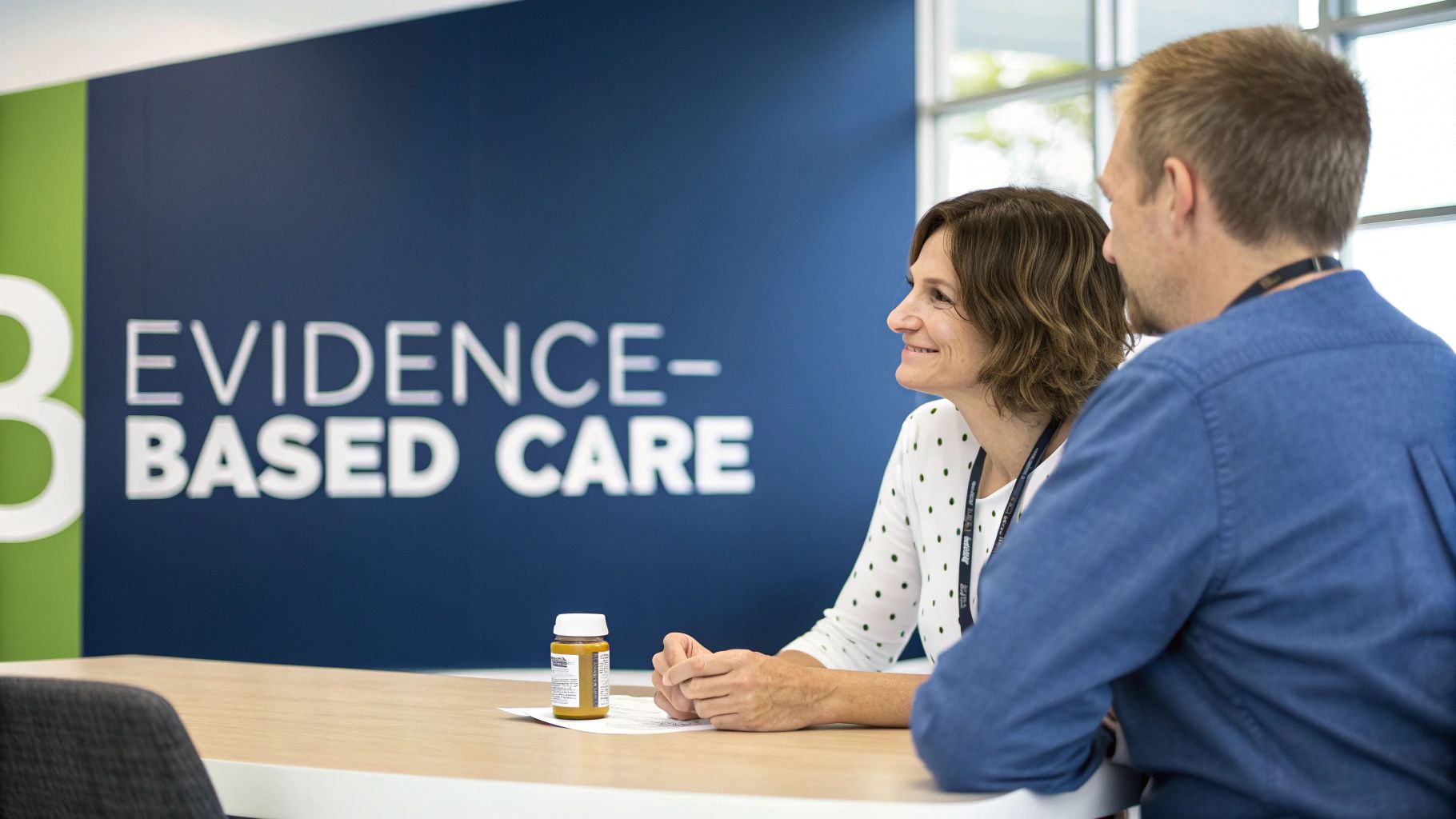
A Foundation for Real Healing
Let's be honest: the physical side of addiction is brutal. The severe withdrawal symptoms and the constant, nagging cravings are often the biggest hurdles that push people back into using. One of the most powerful benefits of MAT is its ability to get these physical aspects under control.
By normalizing brain chemistry and body functions, MAT medications take the edge off. They create a crucial window of opportunity. When your body isn't screaming for relief, your mind is finally free to do the hard, necessary work of recovery. This foundation is where you can start building coping skills, processing underlying trauma, and creating healthier routines for the long haul.
Medication-Assisted Treatment is not just a prescription—it's a comprehensive strategy designed to support long-term recovery by addressing the biological, psychological, and social sides of addiction all at once.
Key Benefits of This Integrated Approach
The real power of MAT comes from pairing medical support with skilled therapeutic guidance. This integrated model creates a strong framework for lasting change. The advantages are clear and well-documented:
- Reduces Overdose Risk: First and foremost, MAT saves lives. By stabilizing brain chemistry and reducing cravings, it significantly lowers the chance of a fatal overdose.
- Improves Treatment Success: It's simple—when you feel better physically, you're more likely to stick with a program. MAT helps people stay in treatment longer, giving them time to fully engage with therapy and build a solid foundation.
- Supports Whole-Person Healing: The approach combines medication with essential therapies like Cognitive Behavioral Therapy (CBT) and group counseling to address the emotional and social triggers behind addiction.
- Restores Stability and Hope: MAT provides the physical and mental calm needed to start rebuilding a life—mending relationships, returning to work, and rediscovering a sense of purpose.
The Most Critical Benefit: Reducing Overdose Risk
Let's be direct. The single most important thing Medication-Assisted Treatment does is save lives. For anyone grappling with an opioid use disorder, or for the families who love them, the threat of a fatal overdose is a constant, gut-wrenching fear. MAT is the most effective tool we have to fight back against that fear.
How does it work? It's not magic; it's brain science. Medications like buprenorphine and methadone occupy the same opioid receptors in the brain that heroin or fentanyl target. Think of it like a game of musical chairs—when the MAT medication is sitting in the chair, there’s no room for the illicit, more dangerous opioids to sit down.
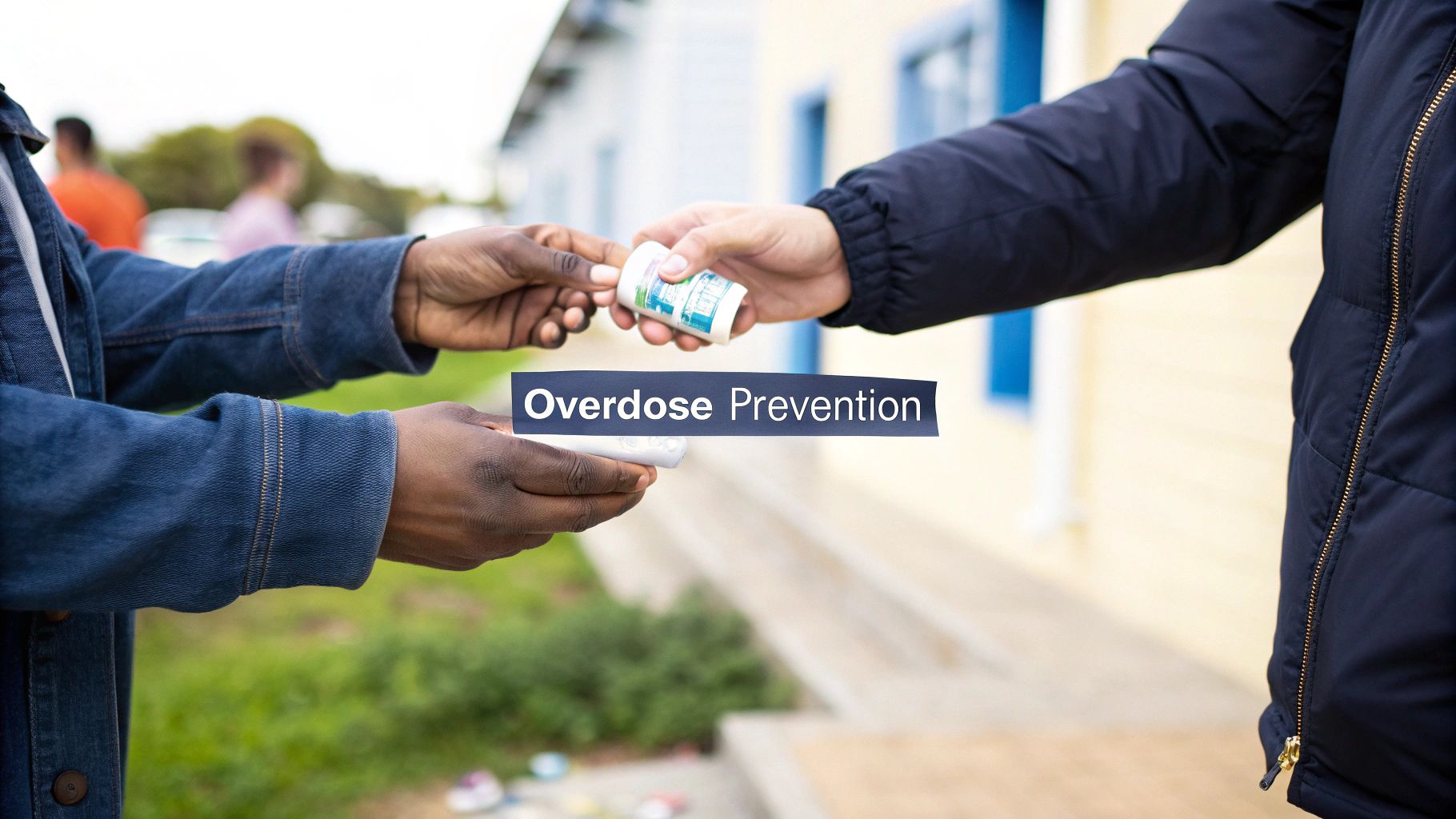
This simple action accomplishes two huge things. First, it stabilizes brain chemistry, which turns down the volume on the relentless, overwhelming cravings that drive people back to using. Second, it often blocks the euphoric high if someone does use, which removes much of the incentive and significantly lowers the immediate danger.
How MAT Becomes a Lifeline
The opioid crisis has hit communities everywhere, and Massachusetts is no exception. In this fight, MAT has proven to be an indispensable lifeline, offering real, tangible hope to individuals and families desperate for a way out.
The data backs this up with staggering clarity. Starting MAT can reduce the risk of a fatal overdose by as much as 76% within the first three months. Let that sink in. A local Massachusetts study found similar, powerful results, linking buprenorphine to a 38% lower risk of overdose death and methadone to an incredible 59% reduction. You can read more about these effective treatment findings and see how programs apply this evidence.
At its core, MAT prevents overdoses by creating stability where there was chaos. By managing cravings and blocking the effects of other opioids, it provides a vital buffer that can literally mean the difference between life and death.
This newfound stability is the foundation upon which true recovery is built. When a person is finally free from the exhausting cycle of chasing a substance just to feel "normal," they can finally start doing the deeper work of healing.
More Than Just Medication: A Path to Safety
It’s crucial to understand that MAT isn't just about getting a prescription. It's a comprehensive treatment plan where the medication is just one piece of the puzzle. This holistic structure is what truly fortifies a person against the long-term risk of overdose.
This safety net is built with several key supports:
- Medical Supervision: You’re not going it alone. A trained medical team manages your medication, adjusts dosages as needed, and monitors your health to ensure everything is working safely and effectively.
- Structured Counseling: Therapy provides the tools to navigate triggers and high-stress situations without turning back to substance use. It's about building new, healthier coping skills.
- Consistent Support: Regular appointments with a dedicated treatment team create a sense of accountability and a reliable support system—something that is often missing.
For families here in Plymouth and across the South Shore, having a loved one in a MAT program can bring an incredible sense of relief. It means they are safe, under professional care, and taking the most proven step to prevent a fatal overdose. This allows everyone to finally shift from a state of constant crisis to a place of hope, supporting a journey toward lasting recovery.
Building a Foundation for Lasting Recovery
Beyond just preventing overdose—which is absolutely critical—one of the biggest wins with Medication-Assisted Treatment is its ability to build a solid foundation for a real, lasting recovery. It’s almost impossible to focus on healing when your every thought is consumed by overwhelming cravings or the misery of withdrawal. Let's be honest, those physical challenges are a huge reason why so many people walk away from treatment before it has a chance to work.
MAT tackles these obstacles head-on. By using FDA-approved medications, we can stabilize your body's chemistry, giving you the mental space and physical calm you need to dig into the real work of recovery.
Think of it like building a house. MAT is the concrete foundation. You can't put up walls on shaky ground; it just won’t hold. With that solid base in place, you can start building the rest of your life—the walls are the new coping skills you learn in therapy, the windows are the fresh perspectives you gain from counseling, and the electrical wiring is the strong support network you create.
From Survival to Stability
This shift from chaos to calm is a game-changer. It lets you move your focus from just surviving the next hour to actively rebuilding your future. Once that constant physical battle subsides, the emotional and psychological healing can finally take center stage.
This newfound stability gives you the power to:
- Truly Engage in Therapy: When your mind isn't screaming for relief, you can actually absorb and use the tools you learn in counseling, like Cognitive Behavioral Therapy (CBT).
- Heal Damaged Relationships: You finally have the emotional bandwidth to start repairing the connections with family and friends that addiction has strained.
- Improve Your Quality of Life: You can start thinking about goals again—maybe that’s getting back to work, going to school, or simply picking up a hobby you once loved.
This stability is especially vital for people dealing with more than one issue at a time. Substance use often goes hand-in-hand with mental health conditions like anxiety or depression. The steady ground MAT provides is essential for treating both conditions at once. You can read more about this in our guide to the value of MAT for a dual diagnosis.
Increasing Treatment Retention and Success
The hard truth about addiction treatment is that it takes time. You can't undo years of substance use in a few days. Study after study shows that the longer a person stays engaged in a structured program, the better their chances are in the long run. People who stick with treatment for 90 days or more have far higher success rates.
This is where MAT really proves its worth. By making the first, most difficult phase of recovery more tolerable, it drastically improves the odds that someone will stick with their program.
When withdrawal isn't a constant, agonizing fight and cravings are under control, people are simply more likely to stay committed. They show up for therapy, engage with their support groups, and build the momentum they need for a sober life.
Staying in treatment isn't just about ticking off days on a calendar. It's about giving yourself enough time to truly learn, practice, and master the skills that will protect your recovery for years to come. For families here in Massachusetts, from Plymouth across the South Shore, this means more of our neighbors are getting the chance they deserve to build a resilient and fulfilling life. MAT provides the runway for a successful takeoff into long-term recovery.
How MAT Medications Pave the Way for Recovery
To really grasp why Medication-Assisted Treatment is so effective, you have to look at what's happening in the brain. These aren't just "replacement drugs"; they are carefully designed tools that help correct the neurochemical chaos addiction leaves behind. This gives you the stability and mental space needed to truly focus on the hard work of recovery.
Think of it this way: you can't build a house during an earthquake. The medications stop the ground from shaking—easing withdrawal and quieting relentless cravings—so you can start laying a solid foundation for sobriety.
This is especially true for people struggling with substance use here in Massachusetts, from Plymouth to the surrounding towns. These FDA-approved medications provide the physical calm and mental clarity essential for engaging in therapy and building a new way of life.
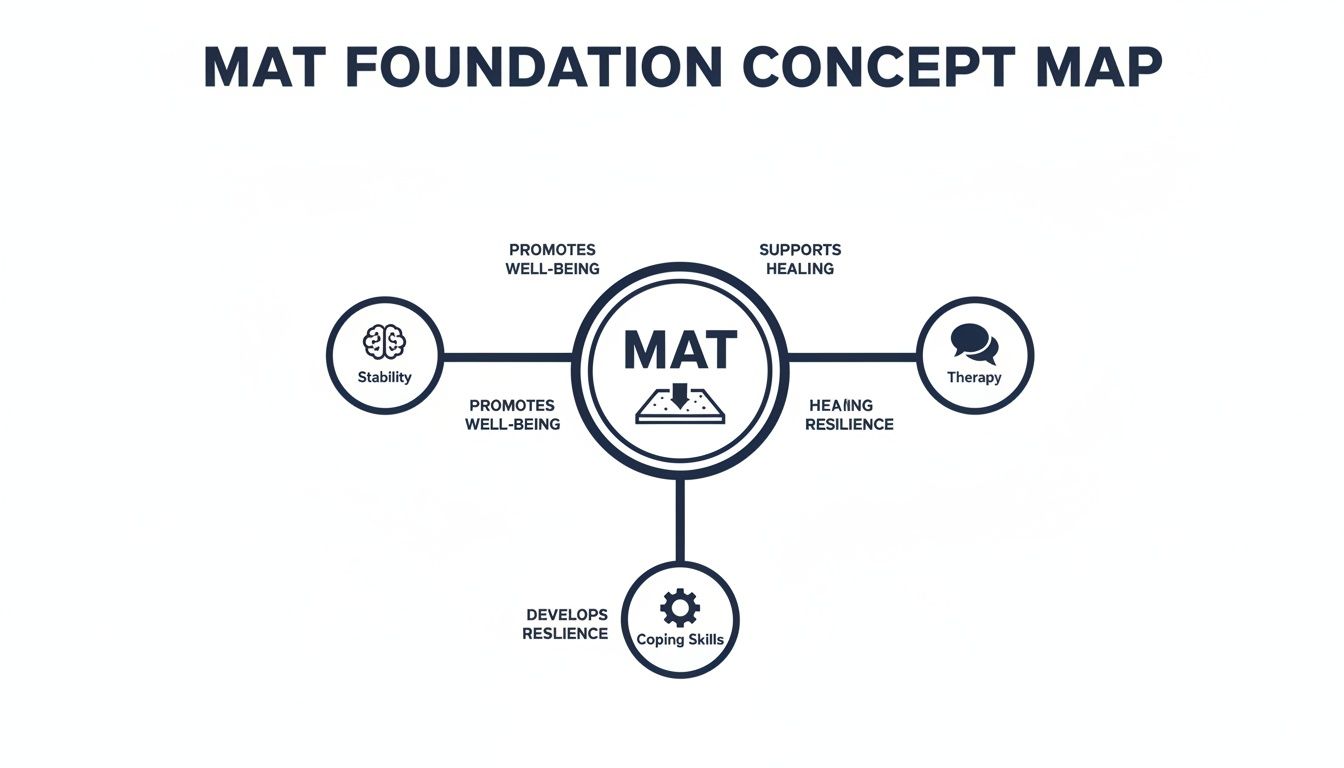
As you can see, the medication is the bedrock. It enables all the other crucial parts of recovery—like counseling and developing new coping skills—to actually take root and grow.
Medications for Opioid Use Disorder (OUD)
When we're talking about opioid use disorder, the medications work by interacting with specific sites in the brain called opioid receptors. Imagine these receptors are like docking stations. When illicit opioids dock there, they trigger a powerful high. But when they leave, the empty stations send out frantic signals, causing intense withdrawal and cravings.
MAT medications occupy these same docking stations, but in a much safer, more controlled way.
- Buprenorphine (often known by brand names like Suboxone® or Sublocade®) is what's called a partial opioid agonist. It docks gently, activating the receptors just enough to stop withdrawal and cravings without producing a high. It also has a "ceiling effect," meaning its opioid effects max out at a certain dose, which dramatically lowers the risk of misuse and overdose.
- Methadone is a full opioid agonist, meaning it occupies the receptors more completely. It's incredibly effective at blocking the effects of other opioids and eliminating withdrawal symptoms entirely. It has a decades-long track record of success and is carefully dispensed in structured clinical settings to ensure patient safety.
- Naltrexone (like Vivitrol®) works in the opposite way. It's an opioid antagonist, which means it acts like a shield, completely blocking the receptors. If someone uses opioids while on naltrexone, they won't feel any of the euphoric effects. This can be a powerful tool for breaking the psychological cycle of use. A person does need to be fully detoxed before starting this medication.
Medications for Alcohol Use Disorder (AUD)
For alcohol use disorder, the medications work a bit differently. Instead of occupying receptors in the same way, they either help dial down the rewarding, pleasurable effects of drinking or create a negative physical reaction if alcohol is consumed.
This approach helps short-circuit the brain's learned response to alcohol, giving you a better chance to build new, healthier coping strategies in therapy.
The goal of these medications is not to substitute one substance for another but to restore normal brain function. This stabilization is what allows individuals to stop focusing on mere survival and start focusing on genuine, long-term recovery.
The right medication is always a personal decision, made in close consultation with your medical provider. It depends on your health history, your specific challenges, and your goals for the future.
Common Medications Used in MAT Programs
To help you see the options at a glance, we've put together a quick-reference guide. This table breaks down the most common FDA-approved medications used in MAT programs for both opioid and alcohol use disorders.
| Medication | Treats | How It Works (Simplified) | Common Brand Names |
|---|---|---|---|
| Buprenorphine | OUD | Partially activates opioid receptors to reduce cravings. | Suboxone®, Sublocade® |
| Methadone | OUD | Fully activates opioid receptors to block withdrawal and cravings. | Dolophine®, Methadose® |
| Naltrexone | OUD/AUD | Blocks the euphoric effects of opioids and alcohol. | Vivitrol®, ReVia® |
| Acamprosate | AUD | Helps rebalance brain chemistry to reduce the urge to drink. | Campral® |
| Disulfiram | AUD | Creates an unpleasant physical reaction if alcohol is consumed. | Antabuse® |
Each of these medications offers a different pathway, but they all share the same goal: to give you the stability you need to reclaim your life from addiction.
Integrating Therapy for Whole-Person Healing
Let's be clear about one thing: Medication-Assisted Treatment isn't just about a prescription. The medication is the critical first step, not the final destination. Think of it like a cast on a broken leg—it stabilizes the injury so the real, internal healing can begin. True, sustainable recovery happens when we address the whole person, not just the physical side of addiction.
By quieting the constant noise of cravings and withdrawal, medications like Suboxone or Vivitrol create a crucial window of opportunity. They give you the mental clarity and emotional stability needed to roll up your sleeves and do the hard work of therapy. You finally have the breathing room to move beyond just surviving day-to-day and can start building a life you don't want to escape from.
Therapy: The Engine of Lasting Change
With your body stabilized, evidence-based therapies become the engine that truly drives your recovery forward. This is where you learn to understand the "why" behind your substance use, develop new ways to cope with stress, and build a defense system against future triggers.
Several therapeutic approaches pair incredibly well with MAT:
- Cognitive Behavioral Therapy (CBT): This is all about identifying, challenging, and changing the destructive thought patterns that lead to using. Once you're stabilized on medication, CBT becomes a practical workshop for rewiring your brain's responses. You can learn more about what is cognitive behavioral therapy and how it works in our in-depth guide.
- Dialectical Behavior Therapy (DBT): If you struggle with overwhelming emotions or difficult relationships, DBT is a game-changer. It gives you concrete skills for practicing mindfulness, tolerating distress, and managing your emotional world.
- Motivational Interviewing (MI): Rather than telling you what to do, this collaborative counseling style helps you tap into your own motivation to change. It's a supportive, judgment-free process designed to strengthen your commitment to recovery.
The Power of a Strong Support System
Addiction thrives in isolation, but recovery blossoms in connection. A comprehensive MAT plan must look beyond the individual and address the social fabric of your life. Nobody recovers in a vacuum, and building a network of genuine support is just as vital as any medication or therapy session.
This is where family counseling and peer support come in. Family therapy helps repair relationships frayed by addiction, teaching everyone better communication and how to create a supportive home environment. It turns your family into a part of your recovery team.
Recovery is a team sport. Integrating medication, individual therapy, family counseling, and peer support creates a multi-layered safety net that addresses the biological, psychological, and social facets of addiction.
Peer support groups, whether they're 12-Step fellowships or other recovery communities, offer something unique: a sense of belonging. Connecting with people who just get it provides hope, accountability, and real-world advice you won't find anywhere else. Throughout Massachusetts, these groups are the backbone of many strong recoveries. This complete, wrap-around care is what turns initial stability into a thriving, new way of life.
Starting Your MAT Journey in Massachusetts
Deciding to get help can feel like the toughest part of recovery, but you absolutely don't have to figure it out alone. If you're in Massachusetts and considering Medication-Assisted Treatment, the path forward is a lot clearer and more supportive than you might think. It all starts with a simple, confidential conversation about where you are right now and where you want to go.
This isn't some cookie-cutter program. The whole point is to build a care plan that actually fits your life—a true collaboration between you and a team of clinical experts dedicated to seeing you succeed.
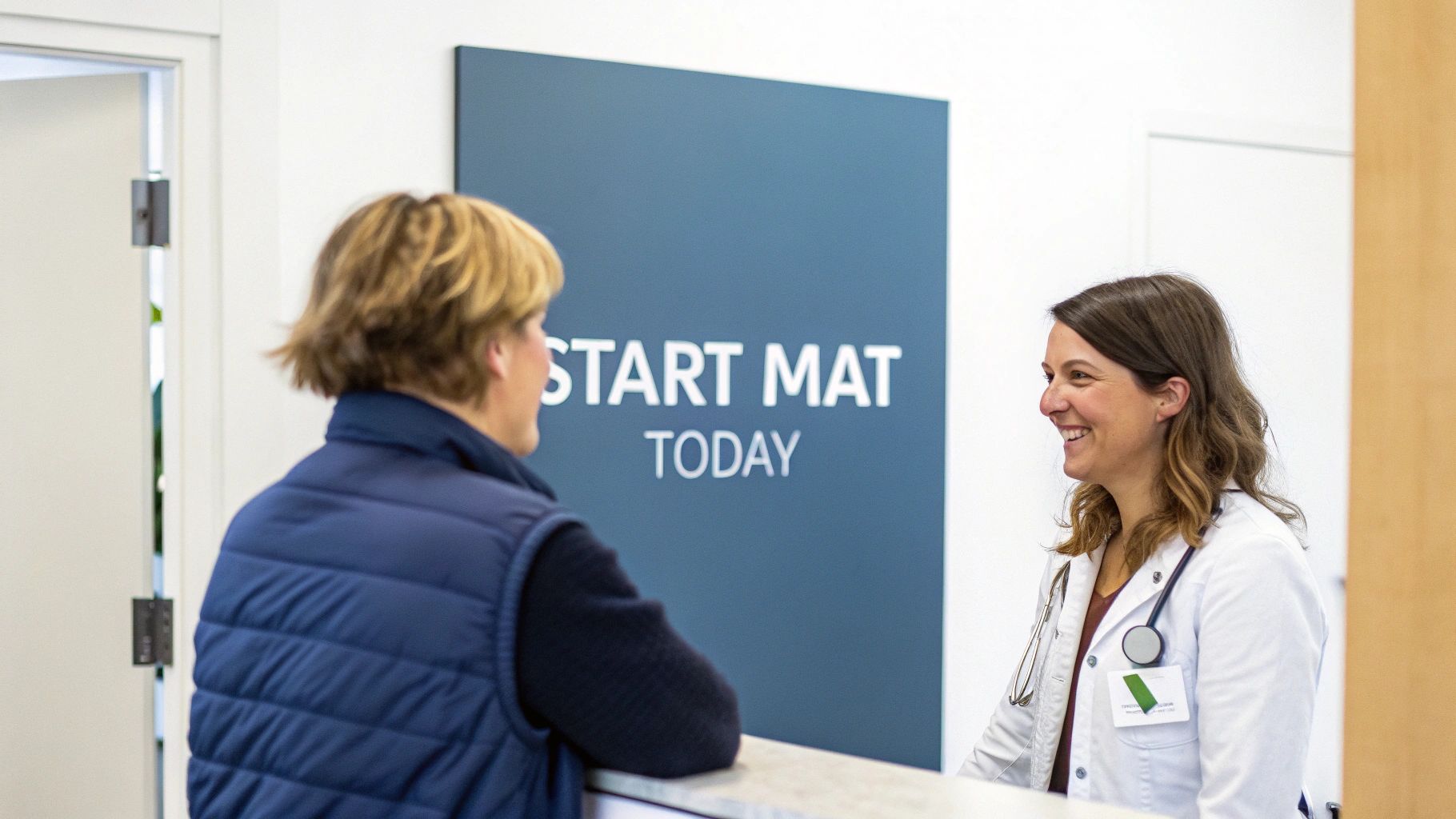
What to Expect When You Begin
Your journey begins with a comprehensive, private assessment. Think of it as a deep dive where our clinicians get to understand your specific history, your unique challenges, and your personal goals for recovery. It’s from this starting point that we can determine the right medication and dosage to effectively manage cravings and withdrawal symptoms. This initial stability is what makes the deeper therapeutic work possible.
So, what does an outpatient program actually look like? It typically involves a rhythm of regular check-ins with medical staff alongside consistent participation in both individual and group therapy. The length of your treatment isn't set in stone; it’s flexible and adjusts based on your progress, ensuring you have a strong support system for as long as you need it.
Navigating Access and Affordability
Worrying about cost should never stand in the way of life-saving treatment. A huge piece of getting started is making sure care is accessible. Our team is here to help you navigate your insurance benefits, verify your coverage, and walk you through any potential costs right from the start.
Because MAT is recognized as an essential health benefit and a proven standard of care, most major insurance plans, including MassHealth, provide coverage. We focus on making it affordable so you can focus on what really matters: your recovery.
A great next step is exploring the different opioid addiction treatment options available to see how MAT can fit into your life. Making that first call is a powerful, direct move toward building a more stable and hopeful future.
Frequently Asked Questions (FAQs)
Is MAT just replacing one drug with another?
This is one of the most common myths about MAT, and the answer is a firm no. The FDA-approved medications used in MAT are prescribed in a controlled, clinical setting to normalize brain function, not to create a "high." They provide the stability needed for a person to fully engage in the therapeutic work of recovery.
How long does MAT last?
The duration of treatment is personalized and determined by you and your clinical team. The goal is to use the medication as long as it provides a clear benefit, helping to prevent relapse and maintain stability. There is no one-size-fits-all timeline for recovery.
Can I do MAT if I have a co-occurring mental health condition?
Absolutely. In fact, MAT is highly effective for individuals with dual diagnoses, such as anxiety or depression. By managing the physical symptoms of addiction, MAT allows you to more effectively address underlying mental health challenges in therapy, which is crucial for long-term well-being.
Is Medication-Assisted Treatment covered by insurance in Massachusetts?
Yes. MAT is recognized as an essential health benefit, and most major insurance plans in Massachusetts, including MassHealth, provide coverage. Our team can help you verify your benefits to ensure you understand your coverage before starting treatment.
