
A halfway house is a structured, supportive place to live that acts as a bridge between an intensive, controlled environment—like a prison or a residential rehab—and a fully independent life. Think of it as a crucial stepping stone, not the final stop. It’s designed to provide the stability and accountability someone needs to get back on their feet in Massachusetts and beyond.
Key Takeaways
- Purpose and Structure: At their core, halfway houses are transitional homes that mix independence with serious accountability. They're built to support people leaving correctional facilities or intensive addiction treatment, giving them the structure they need to avoid relapse or reoffending.
- Varied Models and Rules: No two halfway houses are exactly alike. Here in Massachusetts, some are state-funded and focus on helping people re-enter society from the justice system. Others are privately run and designed specifically for addiction recovery. Life inside is always governed by rules, like curfews, requirements to hold a job, and routine drug testing.
- Distinct from Other Housing: It's really important not to confuse a halfway house with a sober living home. Halfway houses are often tied to the justice system and come with stricter oversight. Sober living, on the other hand, is usually a voluntary step for people who are focused purely on their recovery journey.
- Finding the Right Fit: Getting into a reputable halfway house in Massachusetts takes some work. It involves getting referrals and, crucially, checking for state certification with organizations like the Massachusetts Alliance for Sober Housing (MASH). Knowing what to ask is key to making a successful transition.
So, let's break down exactly what a halfway house is, how it works, and who it's meant to help.
Defining the Modern Halfway House
The best way to think of a halfway house is as a training ground for real life. It’s a place where someone can practice new habits, learn essential life skills, and build a solid support system before they’re completely on their own.
These facilities offer a much-needed buffer. They provide more freedom than you’d find in a correctional facility or an inpatient treatment center, but they also have far more structure than living alone. The entire point is to help residents slowly and safely take on more responsibility, all while having a safety net of rules, peer encouragement, and staff guidance to fall back on.
The whole idea behind a halfway house is that a slow, supported transition back into the world works far better than just throwing someone into the deep end. It helps people tackle the real-world challenges of reentry—from finding work to fixing relationships—all within a supervised and supportive setting.
To give you a quick snapshot, this table summarizes the main jobs a halfway house is designed to do.
Core Functions of a Halfway House at a Glance
| Core Function | Description | Primary Goal |
|---|---|---|
| Structure | Provides a regulated daily routine with curfews, chores, and mandatory meetings. | To establish stability and healthy habits. |
| Support | Offers access to peer support groups, case management, and staff guidance. | To build a reliable recovery network. |
| Accountability | Enforces rules through regular check-ins, drug screenings, and employment requirements. | To foster personal responsibility. |
Each of these functions—structure, support, and accountability—works together to create an environment where residents can build the foundation for a stable, independent future.
Exploring Different Halfway House Models
The term "halfway house" isn't a one-size-fits-all label. Think of it like a toolbox—you need the right tool for the right job. In the world of recovery housing, different models exist to meet the very specific needs of the people walking through their doors.
Getting a handle on these variations is essential, especially when you're looking for the right fit here in Massachusetts. The philosophy behind a house, and where its funding comes from, has a huge impact on the day-to-day experience, the services you'll get, and the overall structure of the program.
It’s a bit like choosing a college. Some offer a broad, general education, while others are highly specialized trade schools. In the same way, some halfway houses provide a safe, structured living environment, while others deliver intensive, hands-on clinical interventions. The best choice always comes down to a person's unique background, their recovery goals, and the level of support they truly need.
The Core Distinction: Supportive vs. Interventive Models
The biggest split between different halfway houses comes down to their core approach. We can break them down into two main categories: supportive and interventive. This simple classification really helps clarify what a program is all about.
A supportive halfway house is, first and foremost, a stable and sober place to live. The main goal here is to give residents a structured environment where they can find a job, mend family relationships, and ease back into the community. The focus is heavy on peer support and accountability, not intensive therapy.
On the flip side, an interventive halfway house provides a much higher level of clinical care. These places operate more like a treatment center, with services like individual counseling, group therapy, and case management baked right into the program. They’re built for people who need ongoing therapeutic support for substance use or mental health while they get back on their feet.
This isn't just our take—it's how experts in the field see it. The International Halfway House Association uses this same breakdown, noting that supportive homes are about providing a stable residence while interventive facilities offer multiple treatment services and tend to be larger operations.
How Funding Shapes the Experience
Another key piece of the puzzle is where the money comes from. A house's funding source often dictates who it serves and what it can offer. In Massachusetts, you’ll typically find two main types.
-
State-Funded Facilities: Often called Residential Reentry Centers (RRCs), these are usually tied to the Department of Correction or another state agency. They primarily serve people coming out of prison. The state generally covers the cost, and living there is often part of parole or a pre-release plan.
-
Private and Non-Profit Homes: These houses are more likely to focus on addiction recovery separate from the criminal justice system. They're funded by resident fees (rent), private insurance, or donations from the community. This funding model usually allows for more program flexibility and can serve a broader group of people looking for a structured, sober home.
Understanding a facility's funding source is critical because it tells you about its primary mission, who it is designed to help, and what the financial expectations will be for residents.
The Role of Clinical Services
The level of clinical support available is a major dividing line. A supportive home might just require you to attend 12-step meetings, but an interventive program will have therapy built directly into your weekly schedule.
Some people absolutely thrive with strong clinical oversight, especially if they're also managing a mental health condition. For others, who might already have a solid foundation in recovery, the peer accountability of a supportive sober home is all they need.
It's vital to remember that for many, a safe roof over their head isn't enough; they need ongoing therapeutic care. This is where certain programs can work hand-in-hand. For example, a person could live in a halfway house while also attending a day treatment program, which provides intensive, structured therapy during the day and complements the supportive environment of the house at night.
A Look at Daily Life and House Rules
Moving into a halfway house means embracing a new, structured way of life. If the idea of a strict set of rules sounds a little daunting, it's important to remember why they exist. They’re there to create a safe, stable, and predictable environment where everyone can focus on what matters most: rebuilding their lives. This structure is the very foundation of daily life, providing the accountability needed to forge healthy habits and get ready for life on your own.
Life inside is a mix of personal responsibility and communal living. It's not just about a list of dos and don'ts; it’s about learning how to manage your time, pitch in around the house, and build a productive routine from the ground up. This framework is designed to replace the chaos that often comes with addiction or life after incarceration with a clear sense of purpose.
What Does a Typical Day Look Like?
While every house has its own rhythm, most follow a similar pattern aimed at building discipline and personal responsibility. A typical weekday might unfold something like this:
-
Morning (6:00 AM – 9:00 AM): The day gets an early start. Mornings are all about taking care of your own space and contributing to the house. That means making your bed, knocking out assigned chores, and getting ready for the day ahead. It’s a simple routine that fosters ownership and respect for the shared home.
-
Daytime (9:00 AM – 5:00 PM): This block of time is dedicated to productive activity. You're expected to either be at a job, actively looking for one, or enrolled in school or a vocational program. This isn't just a suggestion—it's a core requirement, as working toward financial independence is a huge part of the process.
-
Evening (5:00 PM – 10:00 PM): Evenings are for recovery and connection. After work, residents might help with a communal dinner. Later, you’ll have mandatory activities like an in-house group meeting, heading out to a 12-step meeting (like AA or NA), or attending therapy. The day wraps up with a firm curfew, usually around 10 or 11 PM.
The Core Rules and Expectations
The rules in a halfway house aren’t arbitrary; they’re designed to protect the safety and sobriety of every single person living there. To maintain a therapeutic environment, they have to be clear, consistent, and strictly enforced.
The absolute number-one rule is zero tolerance for drugs and alcohol. This is non-negotiable. It's backed up by frequent, random drug tests. A positive test—or refusing to take one—almost always means immediate removal from the house. It's a tough rule, but it’s necessary to protect everyone else's recovery.
Other standard rules you can expect include:
- Mandatory Meetings: You'll be required to consistently attend support groups like AA/NA and any scheduled house meetings.
- Curfew: Every resident must be back in the house by a set time each night. No exceptions.
- Visitor Policies: Visitors are usually allowed only in common areas during specific hours. Overnight guests are never permitted.
- Employment: You have to hold down a job or provide proof that you're pounding the pavement to find one.
- Chores: Everyone pitches in to keep the house clean and running smoothly. It's all about shared responsibility.
These regulations aren't meant to be punishments. Think of them as the external structure that helps you internalize self-discipline and accountability—skills that are absolutely critical for succeeding in the long run.
Earning Your Freedom: The Phased System
Many halfway houses in Massachusetts use a phased system to help residents gradually earn more independence. This approach works like a roadmap, rewarding your progress with more freedom. It’s a smart system that mirrors how trust and responsibility work in the real world.
A phased system is pretty straightforward: as you prove you're committed to your recovery and can handle responsibility, you earn more trust and privileges. It breaks down the huge goal of reintegration into smaller, achievable steps.
Here’s what that progression often looks like:
- Phase One (Orientation): When you first arrive, the rules are tightest. You'll have an early curfew, and you can only leave for work or essential appointments. Supervision is high.
- Phase Two (Integration): After showing good behavior for a month or two, you can move up. This phase might come with a later curfew, weekend passes, and more control over your personal time.
- Phase Three (Transition): In the final phase, you’ve earned a lot of autonomy. You might be allowed overnight passes and have much more flexibility as you get ready to move out on your own.
This tiered structure is a great teacher of cause and effect. It also gives the staff a clear way to track your progress and make sure you're truly ready before you take that next big step. Many of the skills you develop here—like managing your emotions and reframing your thoughts—are the same ones at the heart of therapeutic methods like Cognitive Behavioral Therapy.
Halfway Houses vs Sober Living Homes
When you're looking for recovery housing, the terminology can get confusing fast. You'll hear "halfway house," "sober living home," and "inpatient treatment" thrown around, sometimes as if they mean the same thing. They don't. Each one offers a different kind of support, structure, and experience.
Figuring out these differences is the first step to finding the right fit for yourself or someone you care about in Massachusetts. One place might be designed for someone leaving the justice system, while another is perfect for a person who just finished rehab and needs a strong, sober community. It all comes down to clinical support, funding, personal freedom, and the main goal of the home. Let's clear up the confusion.
Core Mission and Target Population
The biggest difference between a halfway house and a sober living home is who they're built for. A halfway house, sometimes called a Residential Reentry Center (RRC), is most often a bridge from the criminal justice system back to the community. Its primary job is to help people get back on their feet after being incarcerated—it's the "halfway" point between prison and a fully independent life. While substance use is often part of the picture for residents, the focus is squarely on reentry.
A sober living home, on the other hand, is all about one thing: recovery from addiction. People usually move into sober living voluntarily after they’ve completed a more intensive program, like inpatient rehab. The entire purpose is to create a safe, supportive, and substance-free home where residents can put their new coping skills into practice and build a solid foundation for a sober future.
This infographic breaks down some of the daily rules you'll find in both types of housing, though they're often much more rigid in a halfway house.
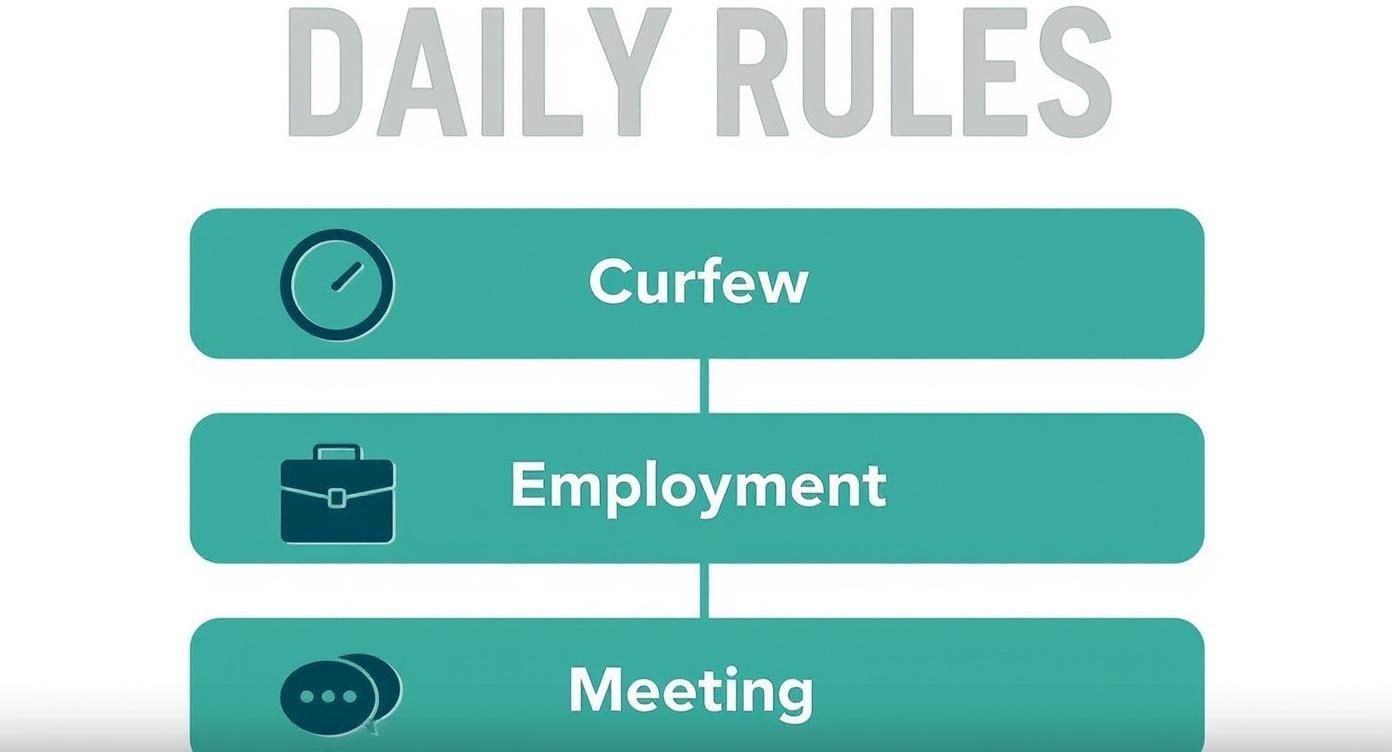
As you can see, daily life is built on a foundation of accountability. This structure is what helps residents establish the healthy routines they need to build a stable life.
Structure, Oversight, and Clinical Services
The amount of supervision and access to professional care also sets these homes apart. Halfway houses almost always have more structure and official oversight, typically from state agencies like the Department of Correction. You can expect on-site staff, strict curfews, mandatory job searches, and required programming.
Sober living homes still have rules, but they operate with more personal freedom. The house is usually run by a house manager and the residents themselves, creating a powerful sense of peer-to-peer accountability. You won't find doctors or therapists on-site; instead, residents are responsible for managing their own recovery path by attending outpatient therapy, going to 12-step meetings, and connecting with sponsors.
The simplest way to frame it is that halfway houses provide supervised reentry, while sober living homes offer supported recovery. One is often a mandatory step, while the other is a voluntary choice.
To help you see the differences at a glance, this table compares these recovery housing options with the highest level of care, inpatient treatment.
Comparing Halfway Houses Sober Living and Inpatient Treatment
| Feature | Halfway House | Sober Living Home | Inpatient Treatment Center |
|---|---|---|---|
| Primary Focus | Reintegration from justice system, often includes recovery support. | Long-term sobriety and peer support in a substance-free environment. | Intensive clinical treatment for addiction and mental health. |
| Typical Resident | Individuals transitioning from incarceration, parolees. | Individuals who have completed a higher level of addiction treatment. | Individuals needing medically supervised detox and 24/7 care. |
| Entry Path | Referral from court, parole, or Department of Correction. | Voluntary, often a step-down from rehab. | Admission through medical or clinical assessment. |
| Clinical Staff | Limited on-site clinical staff; may offer case management. | No on-site clinical staff; peer-led support is the focus. | 24/7 medical and clinical staff, including doctors and therapists. |
| Structure Level | High, with strict rules, curfews, and mandatory programming. | Moderate, with house rules and peer accountability. | Very high, with a fully scheduled, medically monitored daily routine. |
Each path serves a vital purpose. By understanding what makes them unique, you can make a much more confident and informed decision about the next step in the recovery journey.
How to Find a Halfway House in Massachusetts
Finding the right halfway house in Massachusetts can feel overwhelming, but it's a make-or-break step in building a stable, sober life. The whole process really comes down to knowing where to look, understanding how to get in the door, and making sure the place is safe, certified, and a good fit for your recovery.
Think of it less like a search for an apartment and more like finding a launchpad for your future. Whether you're finishing a treatment program or coming from the justice system, the journey almost always starts with a referral.
Key Pathways to Entry
You typically don't just walk up and rent a room in a halfway house. Admission almost always requires a formal referral from an approved source. This is to make sure that everyone living there is a good fit and is serious about the program.
The most common ways in are:
- Referrals from Treatment Providers: This is the most common path for people focused on addiction recovery. If you’re in an inpatient or outpatient program, your case manager or therapist is your best friend. They already have connections with local housing providers and can help you find an opening that makes sense for you.
- Department of Correction or Parole Officers: For anyone leaving incarceration, the justice system handles the placement. Your parole officer or a case manager at the correctional facility will coordinate your move into a state-contracted Residential Reentry Center (RRC).
- Self-Referral and Community Resources: It's less common, but some private sober homes do accept self-referrals. You can also get guidance and connections from community health centers or social workers who know the local landscape.
Navigating State Resources and Verifying Certification
In Massachusetts, you have to do your homework to make sure a halfway house or sober home is legitimate. The state gives you tools to vet facilities so you can avoid predatory or poorly run houses. Your first and most important step is checking for certification.
The gold standard here is the Massachusetts Alliance for Sober Housing (MASH). If a home is MASH-certified, it means they've met strict standards for safety, ethics, and how they operate. You should always put these certified homes at the top of your list.
Another great resource is the Bureau of Substance Addiction Services (BSAS), which oversees and licenses treatment programs across the state. Their helpline and website can point you toward state-approved programs and other recovery resources. Checking a home's credentials isn't just about paperwork—it's about protecting yourself.
A certified home signifies a commitment to resident safety and ethical practices. It’s a clear indicator that the environment is structured to support recovery, not exploit vulnerability.
Understanding the Financial Side
What you'll pay for a halfway house in Massachusetts really depends on how it's funded. State-funded RRCs for those in the justice system often have little to no direct cost to the resident because they're covered by state contracts. Historically, these houses popped up as part of the criminal justice system back in the 1920s, and today, the federal government contracts with 154 of them nationwide. It shows just how vital they are. You can find more on their growth over at PrisonPolicy.org.
On the other hand, for private, recovery-focused homes, residents are usually expected to pay weekly or monthly fees, much like rent. These fees can run anywhere from $150 to $300 per week, covering your room, utilities, and program oversight. It’s always worth asking about payment options, as some places might accept MassHealth or private insurance to help with the cost.
What to Expect During the Application and Intake Process
Once you've found a promising home and have a referral, you'll go through an application and interview. This is a two-way street. The staff is trying to see if you're a good fit, and you should be doing the same—is this place right for you?
Be ready to talk openly during the intake interview about:
- Your personal history, including your substance use or legal background.
- Your commitment to recovery and your willingness to live by the house rules.
- Your plans for work and how you'll cover the fees.
- Your goals for recovery and what you're hoping to accomplish by being there.
This whole process just makes sure that everyone moving in is on the same page and is ready to contribute to a positive, supportive home. If you're looking for more intensive clinical care before making this transition, learning how to find drug rehab centers can give you the solid foundation needed to succeed in a halfway house.
Measuring the Success of Halfway Houses
It’s the million-dollar question for anyone considering a halfway house for themselves or a loved one: Do they actually work?
The short answer is a resounding yes. When a program is well-run and committed to its mission, it can make a world of difference. Success isn't just measured by staying sober or out of trouble, though those are huge wins. It's also about the tangible, real-world progress residents make—things like landing a steady job, mending broken family ties, and learning how to manage life on life's terms.
Think of it as a bridge. On one side, you have a highly controlled environment like a treatment center or correctional facility. On the other, you have complete freedom and all the pressures that come with it. A halfway house provides a safe, structured path to get from one side to the other, offering a crucial safety net while residents start rebuilding their lives.
The Evidence Supporting Positive Outcomes
When you dig into the research, a very encouraging picture emerges. The data consistently shows that the structured support found in halfway houses leads to lower rates of relapse and re-offense. This isn't just a hopeful theory; it's a proven model for helping people get back on their feet.
For instance, a major meta-analysis of high-quality studies in the U.S. found that individuals who participated in a halfway house program were 1.27 times less likely to reoffend than those who didn't. The trend holds true internationally, too. Similar programs have shown impressive completion rates of 89.9% and very low relapse rates of just 9.24%. You can explore the detailed findings on halfway house effectiveness on Wikipedia.
What this data really tells us is that a gradual, supervised return to the community works far better than an abrupt one. It gives people the time and the tools they need to truly succeed long-term.
Key Factors for a Successful Program
Of course, not all halfway houses are created equal. The ones that consistently produce the best results for their residents tend to share a few core ingredients. These elements work together to create an environment where lasting change can happen.
So, what makes a program stand out?
- Strong Peer Support: A healthy house has a culture where residents support one another and hold each other accountable. This sense of community and shared purpose is incredibly powerful.
- Connection to Community Resources: The best programs don't operate in a vacuum. They actively help residents connect with job training, mental health services, educational programs, and other vital local resources.
- Clear and Consistent Rules: Firm, fair rules about curfews, sobriety, and employment create a stable and predictable environment. This structure is what allows residents to focus on their recovery.
- Skilled Staff and Management: Having a professional and compassionate team providing guidance and case management can make all the difference in a resident's journey.
Ultimately, the success of a halfway house in Massachusetts or anywhere else comes down to how well it balances structure with genuine support. It has to be more than just a place with rules; it needs to be a place that empowers people to build confidence, learn new skills, and create a solid plan for a better life.
Frequently Asked Questions About Halfway Houses
It's completely normal to have a lot of practical questions when you're thinking about the next steps in recovery or reentry. Let's tackle some of the most common things people ask when considering a halfway house here in Massachusetts.
How Much Does a Halfway House Cost in Massachusetts?
This is a big one, and the answer really depends on how the house is funded. For state-funded programs, the cost can be very low or even zero, as they're often covered by agencies like the Department of Correction or state health services.
Private homes, on the other hand, operate more like a rental situation. You can expect to pay a weekly fee, which typically falls somewhere between $150 and $300. It's always worth asking if they accept MassHealth or private insurance, as this can help offset some of the out-of-pocket expense.
Can I Use My Phone and Have Visitors?
Most houses have pretty clear rules about personal electronics and having people over. When you first move in, don't be surprised if your phone use is limited. These privileges are usually earned back over time as you demonstrate your commitment to the program.
Visitors are generally welcome, but only during specific hours—usually on the weekends. To keep the environment safe and structured for everyone, you can count on one rule being universal: no overnight guests.
What Happens If I Relapse or Break a Major Rule?
Every house has its own policy, and the consequences will match the seriousness of the situation. A relapse is almost always treated with urgency to protect the sobriety of the other residents. This often means an immediate discharge, but it should come with a direct referral to a higher level of care, like a detox facility.
For other major rule violations, the house might start with smaller steps, like taking away certain privileges or putting you on a behavioral contract to get back on track.
How Long Do People Typically Stay?
There's no single answer, but most residents stay for anywhere from three to twelve months. The right amount of time is really about you—your progress, the program's structure, and what your personal transition plan looks like.
The whole point is to give you enough time to build a rock-solid foundation for the future. You want to feel confident and prepared for independent living before you make that next move.
