
Navigating the early days of sobriety can be overwhelming, but you don't have to do it alone. In Alcoholics Anonymous (AA), a sponsor acts as a personal guide, offering experience and support as you begin your journey. This relationship is often a cornerstone of long-term recovery, providing a direct line to someone who understands the challenges you're facing.
Key Takeaways
- A Sponsor is a Peer Guide, Not a Therapist: A sponsor is an experienced, sober member of AA who guides a newcomer through the 12 Steps based on their own personal journey. They are not a clinical professional and should not replace therapy for underlying mental health issues.
- The Primary Focus is the 12 Steps: The core purpose of the sponsor-sponsee relationship is to work the program of Alcoholics Anonymous. They share how they applied the steps to their own life to achieve and maintain sobriety.
- Sponsorship Provides Crucial Accountability: Having a dedicated person to call during difficult moments provides a vital lifeline, especially in early recovery. This accountability helps break the isolation that often fuels addiction.
- Finding a Sponsor is an Active Process: To find a sponsor in Massachusetts, attend various local AA meetings, listen for someone whose story resonates with you, and then have the courage to ask them for guidance.
Understanding the Role of an AA Sponsor
Starting the journey to sobriety can feel completely overwhelming, like you’ve been dropped in the middle of a dense forest without a compass. A sponsor is that compass—a mentor who offers direction, support, and a steady hand, all based on their own hard-won experience.
They aren't therapists or professional counselors. They’re simply one alcoholic helping another. This peer-to-peer relationship is one of the most powerful parts of the Alcoholics Anonymous program, creating a personal connection that’s often the key to sticking with it for the long haul.
The sponsor's main job is to guide their sponsee through the 12 Steps of AA. This isn't about telling you what to do; it's about sharing how they did it, offering practical suggestions, and helping you make sense of the principles that have kept them sober.
This model is baked right into the culture of AA. Its importance is clear when you look at the numbers. A North American AA survey found that roughly 80% of attendees reported having a sponsor, which shows just how central this practice is. You can read more about the study's findings on sponsorship prevalence.
The sponsor-sponsee relationship is also a frequent topic of conversation in recovery meetings. Exploring different group topics for addiction recovery can offer more perspective on how peer support works within a structured treatment setting. Here in Massachusetts, from the Berkshires to Boston, finding a good sponsor is seen as one of the most important first steps you can take to build a solid foundation for a sober life.
Sponsor vs. Therapist: Understanding the Difference
It’s easy to get the roles of an AA sponsor and a therapist mixed up, but they play two very different—and equally vital—parts in building a solid recovery foundation.
Think of it like this: a personal trainer at the gym uses their own experience and knowledge to guide your workout, helping you build strength and hit your fitness goals. A doctor, however, uses years of clinical training to diagnose and treat an underlying medical issue. Both are crucial for your overall health, but they operate in completely different lanes.
So, What's the Real Distinction?
An AA sponsor is all about peer support. They're a guide who has walked the same path, offering advice that comes directly from their own personal journey through the 12 Steps. They’ve been there. They get it.
A therapist, on the other hand, is a licensed clinical professional. They’re trained to dig deeper, helping you diagnose and treat the underlying issues that often drive addiction—things like trauma, anxiety, or depression. They use proven, evidence-based methods like Cognitive Behavioral Therapy (CBT) to help you rewire old thought patterns and build healthy coping skills.
The entire dynamic of the relationship is different, too. The connection with a sponsor is informal, built on a foundation of mutual trust and the simple principle of one alcoholic helping another. In contrast, the relationship with a therapist is structured, clinical, and legally confidential, bound by a strict code of professional ethics.
Knowing what a sponsor is in AA means recognizing they are your guide for the program, not a replacement for professional mental healthcare.
This infographic helps visualize the sponsor's role.
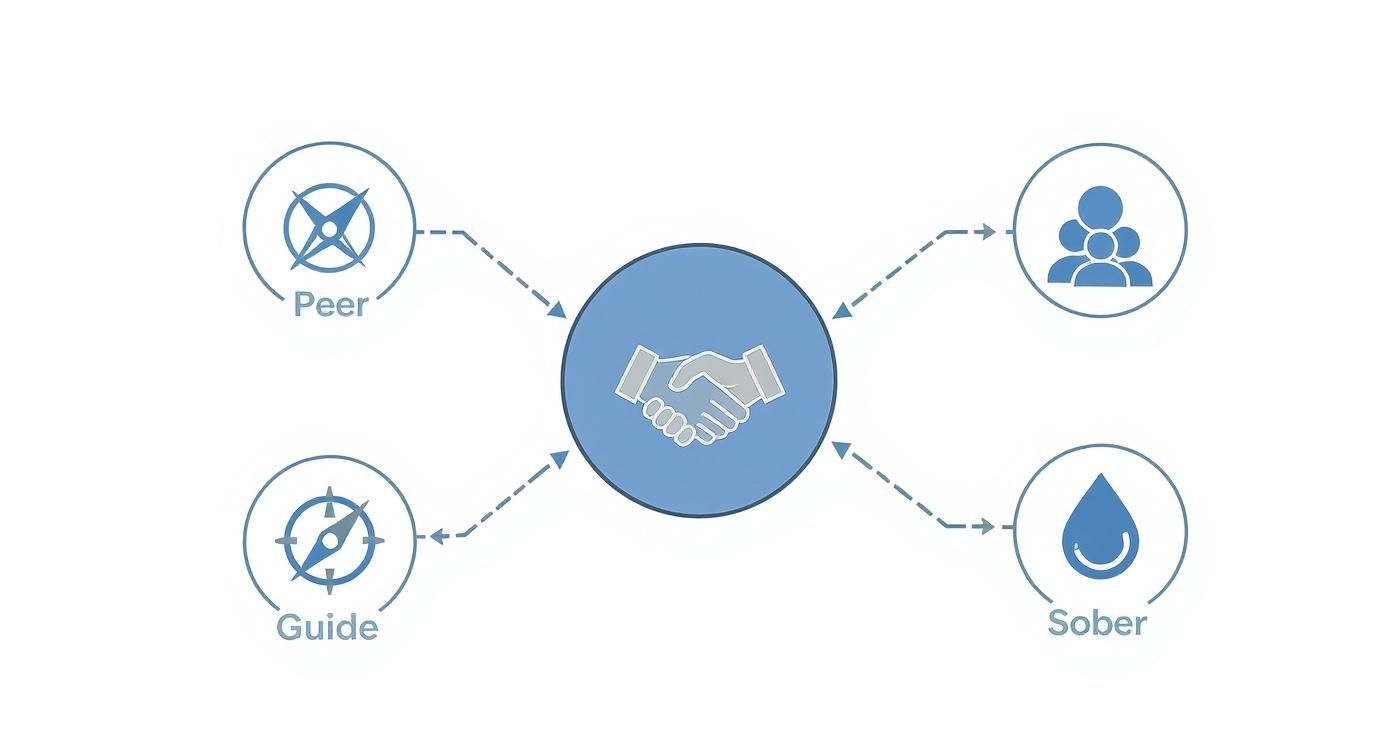
As you can see, a sponsor is a mentor, a fellow traveler, and a source of sober support—all roles defined by shared experience, not a clinical degree.
Comparing the Roles of an AA Sponsor and a Therapist
To really make it clear, let's put their roles side-by-side. While your sponsor is the person you can call late at night when a craving hits, your therapist is the professional you see during scheduled appointments to work on the deeper psychological roots of your addiction.
This table breaks down the key differences in their focus, training, and overall function.
| Aspect | AA Sponsor | Therapist / Counselor |
|---|---|---|
| Primary Role | To guide a sponsee through the 12 Steps of Alcoholics Anonymous. | To provide clinical diagnosis, treatment, and therapy for substance use and co-occurring disorders. |
| Basis of Expertise | Personal experience with addiction and recovery in the AA program. | Formal education, clinical licensure, and professional training in psychology and counseling. |
| Focus | Spiritual and practical application of the 12-Step program to daily life. | Addressing underlying psychological issues, trauma, and mental health conditions. |
| Relationship | Informal, peer-to-peer mentorship based on shared experience. | Formal, professional, and therapeutic relationship with strict ethical boundaries. |
| Cost | Completely free; an act of service within the AA fellowship. | Paid service, typically covered by health insurance or self-pay. |
For many people in recovery, having both a sponsor and a therapist creates the most powerful support system. Your sponsor is in the trenches with you, navigating the day-to-day challenges of the AA program. At the same time, a therapist at a center like South Shore Recovery can help you heal the underlying wounds that made you vulnerable to addiction in the first place.
How Sponsorship Directly Impacts Sobriety
So, why is having an AA sponsor such a big deal for staying sober long-term? Think of it this way: a sponsor takes the idea of "support" from something abstract and turns it into a real, tangible tool you can use every single day. They become your lifeline, especially in those early, rocky days of sobriety when the urge to drink can feel completely overwhelming.
This whole relationship is built on a foundation of shared experience. It’s about having someone in your corner who genuinely gets it because they’ve walked the same path. They offer you firsthand guidance through the emotional ups and downs of the 12 Steps, helping you translate the program from words in a book into a new way of life.

A Lifeline for Accountability and Guidance
Your sponsor is your accountability partner, the one person you can be brutally honest with about your struggles without worrying about being judged. This connection is most powerful when you're on the brink of a bad decision. Imagine a powerful craving hitting you late on a Tuesday night; your sponsor is the person you call right then and there for a dose of perspective and support.
This direct, personal accountability is a total game-changer. It shatters the cycle of isolation that addiction thrives on. Just knowing you have to check in with someone who truly cares about your recovery can be the very thing that stops a slip from happening.
A sponsor isn’t there to solve your problems for you. Their job is to show you how to use the tools of the 12 Steps to solve them yourself. They share their own experience, strength, and hope, empowering you to build a solid foundation for your own sobriety.
The impact here isn't just a collection of nice stories; the data backs it up. Research consistently shows a powerful link between having a sponsor and staying sober. In fact, a major review of multiple studies found that people with a sponsor were more than three times as likely to remain abstinent than those without one. You can dive into the specifics of sponsorship's predictive power by reading the full research on recovery outcomes.
Strengthening Your Recovery Plan
This unique relationship also works in perfect harmony with professional treatment. The accountability you get from a sponsor perfectly complements the structured strategies you learn in therapy. It’s a classic case of one-plus-one equals three.
For instance, your sponsor can help you apply the coping skills and plans you developed in a relapse prevention program to real-life triggers and stressful situations. This powerful blend of peer support and clinical care creates a much stronger safety net, covering both the practical, day-to-day challenges and the deeper psychological work of recovery.
How to Find an AA Sponsor in Massachusetts
Finding a sponsor in Alcoholics Anonymous can feel like a huge step, but it’s probably one of the most important things you’ll do to build a solid foundation in sobriety. The search really just starts with one simple action: showing up.
Start by attending different AA meetings across Massachusetts. Whether you’re in Boston, out in Worcester, or down on the Cape, getting to a variety of in-person or even online meetings is the best way to begin. This is your chance to just listen to people share their stories and experience.
You're not just looking for someone with the most sober time. You're looking for a connection. As you listen, pay attention to the people whose message really clicks with you—the ones whose approach to recovery and life just seems to make sense. The old AA saying is spot on: "look for someone who has what you want." That might be their sense of calm, their brutal honesty, or the way they handle life with a positive outlook.

Taking the First Step to Ask
Walking up to someone after a meeting can be nerve-wracking, I get it. But try to remember that in recovery, asking for help is a sign of incredible strength. Most seasoned AA members see it as a privilege to be asked to sponsor someone.
There’s no need for a big, formal speech. Keeping it simple and direct is almost always the best way to go.
- "Hi, I'm [Your Name]. I'm pretty new here, and what you shared really hit home for me."
- "I’m looking for a sponsor to help me work through the steps. Is that something you’d be open to talking about?"
- "I'm trying to find a sponsor, and I was wondering if you might be available. If not, could you maybe point me toward someone who is?"
Even if the person you ask isn't available to take on someone new, they'll almost certainly be happy to help you find someone who is. The most important part is just starting the conversation.
Using Local Massachusetts Resources
Right here in the Bay State, we have some fantastic local resources that can help you get connected with the AA community. Think of these organizations as central hubs for everything from meeting schedules to sponsorship information.
One of the best ways to find a sponsor is to find a "home group"—a specific meeting you attend regularly. This consistency allows you to build relationships naturally, making it much easier to identify and approach a potential sponsor you trust and respect.
A great move is to reach out to a local AA Intergroup office. The Eastern Massachusetts Central Service Office in Boston and the Worcester Area Intergroup are truly invaluable. They can give you up-to-date meeting lists and point you toward beginner meetings, which are often packed with members actively looking to sponsor newcomers. They exist to connect you with the network you need.
Finding the right sponsor is a game-changer for long-term recovery, just like finding the right professional support is. For anyone looking for that structured care, exploring options for alcohol rehab in Massachusetts can provide the clinical foundation that sponsorship complements so well.
Qualities of a Great Sponsor and Red Flags to Avoid
Picking a sponsor is one of the biggest decisions you'll make in early recovery. This person will be your guide through the 12 Steps, so knowing what to look for—and what to run from—can make a huge difference in building a solid foundation for your sobriety.
This isn't about finding a new best friend or a life coach. It’s about finding someone who can clearly and effectively share their own experience with the AA program. A great sponsor is a mentor, not a director; they empower you to find your own way.
Green Flags: What to Look For
Spotting a good sponsor comes down to seeing their commitment to their own recovery. They don't just talk the talk; they lead by example, showing you how the program works through their own actions.
Here are a few key qualities of a solid sponsor:
- They Have Their Own Sponsor: This is a big one. It shows they're still actively working the program and understand what it means to be accountable to someone else.
- They Keep the Focus on the 12 Steps: A great sponsor’s job is to guide you through the Steps as they are laid out in the AA literature, not to give you random life advice. The Steps are the solution.
- They Respect Boundaries: They get that their role is about your recovery, not your finances, career, or relationships. They stick to what they know: AA.
- They Have Solid Sobriety Time: There's no magic number here, but you generally want someone who has enough time under their belt to have navigated some of life's ups and downs while sober.
A healthy sponsorship is built on mutual respect and a shared goal: sobriety. Your sponsor should create a safe, supportive atmosphere where you can be honest without fear of judgment. Their role is to guide, not control.
Red Flags: What to Avoid
Just as important as knowing what to look for is knowing what to steer clear of. An unhealthy sponsorship can be confusing at best and, at worst, can actually harm your recovery.
Be cautious if a potential sponsor does any of the following:
- Tries to "Play God": A sponsor should never tell you what to do with your life. They shouldn't be dictating your choices, advising you on prescribed medications, or giving unsolicited opinions on things outside of the program.
- Lacks Boundaries: Any sponsor who makes romantic or sexual advances, asks for money, or tries to pull you into their personal drama is crossing a major line. This is not what sponsorship is for.
- Acts Like an "AA Expert": Be wary of anyone who acts like they have all the answers or presents their personal opinions as AA law. Real sponsorship is based on humility and sharing personal experience, not lecturing.
Ultimately, trust your gut. If a relationship with a sponsor feels off, uncomfortable, or controlling, it’s not just acceptable to find a new one—it's the wisest thing you can do. Your recovery always comes first.
Combining Sponsorship with Professional Treatment
Think of a strong, lasting recovery as being built on two essential pillars: peer support and clinical care. They aren't in competition; in fact, they work together powerfully to create a safety net that covers all the bases. The personal guidance you get from an AA sponsor beautifully complements the structured support you find in a professional treatment program.
It’s a bit like building a house. Your clinical team, like ours at South Shore Recovery Center, is the crew that pours the solid, concrete foundation. They use evidence-based therapies to address co-occurring mental health conditions and provide necessary medical support.
Your sponsor, on the other hand, is like the master carpenter who helps you frame the house of your new life. They walk you through it room by room, guiding you through the practical application of the 12 Steps in your day-to-day world.
The Best of Both Worlds
Outpatient programs across Massachusetts actively encourage this dual approach, and for good reason. While a sponsor helps you navigate the spiritual and real-world challenges of the AA program, a clinical team gives you the tools to heal deeper psychological wounds that often fuel addiction.
This combination ensures that no part of your recovery gets ignored. You truly get the best of both worlds, blending the hard-won wisdom of a peer with the proven expertise of a clinician.
The goal is to create a support system that is both broad and deep. While sponsorship offers immediate, real-world accountability, professional treatment provides the skills to manage the underlying drivers of addiction for good.
Here’s how it works in practice: A therapist might use Cognitive Behavioral Therapy (CBT) to help you identify and reframe the negative thought patterns that trigger cravings. Then, when you're out in the real world and a trigger hits, your sponsor is the person you call to help you put those new CBT skills into action right in that moment.
This integrated model is central to how we approach care. We don't just recommend 12-Step involvement; we actively facilitate it. We've seen firsthand that when our clients find a sponsor while also receiving evidence-based treatment, their chances of building a durable, long-term recovery go up significantly. This combined strategy ensures you have a robust support network for every single challenge you face on your journey.
Frequently Asked Questions About AA Sponsorship
Navigating the nuances of sponsorship can bring up many questions, especially when you're new to the program. Here are answers to some of the most common queries.
Should my sponsor be the same gender?
Yes, it is strongly recommended in AA to find a sponsor of the same gender. This is a practical guideline designed to prevent romantic complications and keep the focus purely on recovery and working the 12 Steps.
How often should I talk to my sponsor?
In early recovery, daily contact is common and highly encouraged. A quick daily check-in call helps build accountability and establishes the habit of reaching out for support. As you build a stronger foundation in sobriety, the frequency might change, but regular communication remains essential.
What if I disagree with my sponsor?
Disagreements can happen. A sponsor's role is to share their experience and guide you through the 12 Steps, not to give orders. If you disagree with a suggestion, it's best to discuss it openly and honestly. Ultimately, you are responsible for your own recovery.
Do I have to pay a sponsor?
No, absolutely not. Sponsorship is an act of service within the fellowship of Alcoholics Anonymous and is always free. It is based on the principle of one alcoholic helping another, ensuring that this vital support is available to everyone, regardless of their financial situation.
